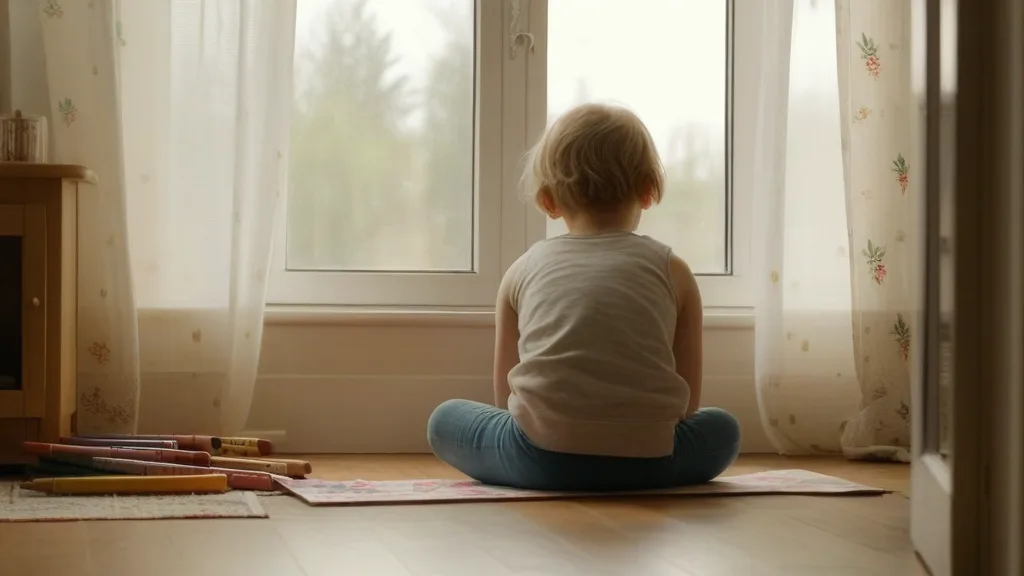
It’s 6:30 PM. Your child is exhausted after a full day, hungry, overstimulated. You say: “Time for a bath.” Response: screaming, crying, throwing themselves on the floor.
Sound familiar? Probably. Because 6:30 PM is zero hour in every household with a 3–7-year-old.
But imagine a different scenario. It’s 6:30 PM. You play the same calm music as always. The child hears it and knows: “Now bath, then story, then goodnight song.” They walk to the bathroom. On their own. No screaming.
What changed? A ritual.
2025 research shows that daily rhythm and repeatable rituals are the most effective way to build emotional regulation in children ages 3–7. More effective than explaining. More effective than rewards and punishments. More effective than “count to ten.”
Waldorf knew this 100 years ago. Montessori 120 years ago. Neuroscientists confirmed it in 2025.
In this article: 8 specific rituals to implement today. Zero cost, zero “expert equipment.” Just you, your child, and repetition.
Why Do Rituals Work? (The Science in 3 Minutes)
The 3–7-Year-Old Brain
The prefrontal cortex – the part of the brain responsible for impulse control, planning, and emotional regulation – doesn’t fully mature until age 25. In a 4-year-old, it’s still under construction.
What does this mean in practice? The child:
- CANNOT “control themselves” like an adult (they physically lack the tools)
- Needs EXTERNAL regulation (co-regulation with a parent) before learning internal regulation
- Learns best through REPETITION and PREDICTABILITY
Why Ritual Beats Logic
When you tell a 4-year-old: “You need to take a bath because hygiene is important” – you’re using the prefrontal cortex (logic, planning). But that cortex ISN’T RUNNING at full speed yet.
When you play the same music every evening – you’re using the amygdala and hippocampus (habitual patterns, procedural memory). These structures work beautifully from infancy.
Ritual bypasses logic and goes straight to habit. That’s why it works.
2025 Research
- Daily rhythm (consistent order of activities) lowers cortisol levels in children ages 3–6 – less stress, fewer tantrums
- Children with predictable rhythm show 40% fewer externalizing behaviors (screaming, aggression, resistance)
- Waldorf transition rituals (song or verse for activity changes) are one of the most effective interventions for difficult transitions in autistic children
8 Rituals for Every Day
Ritual 1: Transition Song (Waldorf)
What it is: The same short song (or verse) sung ALWAYS during activity changes.
How to implement:
- Choose a simple melody (can be familiar, with new words)
- “Time to clean up, clean up, clean up, everything goes back to its place”
- Sing it ALWAYS before the same activity
- After 5–7 days, the child will respond to the song automatically
Why it works: The brain creates a connection: song = this activity. No need to explain, ask, negotiate.
For autism: game-changer. Transitions between activities are one of the biggest stressors. A song provides predictability.
For ADHD: keep it short (max 30 seconds). A long song = lost attention.
Ritual 2: Morning Circle (Montessori Circle Time)
What it is: 5–10 minutes in the morning, sitting together on the floor to “open the day.”
How to implement:
- Sit on a rug (always the same one)
- Everyone says one sentence: “Today I feel… because…”
- Together, look at the visual daily schedule (picture cards on the wall)
- Child chooses one activity for today: “I want to paint today”
Why it works: Gives a sense of control (choice), names emotions (regulation), and shows the day’s structure (predictability). Three in one.
Waldorf twist: light a candle at the start of the circle. Blowing it out = end of circle. Fire fascinates children and creates a ritual “boundary.”
For HSC: quiet and calm in the morning is salvation. Don’t start the day rushing.
Ritual 3: Hand Breathing (Montessori + Neuroscience)
What it is: A breathing technique the child can do ALONE, anywhere.
How to implement:
- Child spreads one hand (fingers apart)
- With the other hand, “traces” up and down the fingers: up = inhale, down = exhale
- 5 fingers = 5 breaths
- Practice DAILY in the morning (not just during crisis!)
Why it works: Activates the vagus nerve (like belly breathing from article 2), but the child can do it ALONE – at preschool, in a store, in the car. Builds independence.
For ADHD: add counting aloud: “inhale-1, exhale-1, inhale-2…” – engages an additional attention channel.
For autism: predictability of 5 fingers = 5 breaths. Always the same. Safe.
Ritual 4: Evening Story with a Question (Waldorf Storytelling)
What it is: A daily bedtime story with one question about the character’s emotions.
How to implement:
- Read or tell a story (5–10 minutes)
- Before the ending, ask: “How do you think the bear felt when he lost his friend?”
- Child answers (don’t correct!)
- “And what would he do to feel better?”
Why it works: Narrative builds empathy and theory of mind (the ability to understand another person’s perspective). This is NOT a quiz – it’s an invitation for emotional reflection.
Reggio connection: child draws “how the bear felt” – emotion documentation.
For autism: use specific, named emotions (not “how did he feel?” but “was he sad or angry?”). Abstract questions can be frustrating.
Ritual 5: Gratitude Jar (Montessori Practical Life)
What it is: Every evening, the family drops a slip of paper into a jar with one thing they’re grateful for.
How to implement:
- Jar (or box) in a visible place
- Slips of paper and pencil nearby
- Daily after dinner: everyone writes (or draws) one thing
- On Sunday (or monthly): read all the slips together
Why it works: 2025 research: regular gratitude practice in children improves emotional regulation, reduces aggression, and increases empathy. Visible effects after just 2 weeks.
Montessori: child writes and inserts the slip themselves – practical life.
For ADHD: drawing instead of writing (faster, less frustrating). One slip = one drawing.
Ritual 6: Quiet Time After Lunch (Waldorf Rhythm)
What it is: 20–30 minutes of quiet after lunch. Not sleep – QUIET.
How to implement:
- After lunch: “Now it’s quiet time”
- Child may: lie with a book, listen to an audiobook, play quietly, draw
- Child may NOT: screens, loud play, conversations
- You’re quiet too (modeling!)
Why it works: Waldorf has always understood that children need a tension–release rhythm. Morning = activity. After lunch = recovery. Afternoon = renewed activity. Without this cycle – overstimulation and evening meltdown.
For HSC: a lifesaver. Sensitive children MUST have space for sensory reset.
For ADHD: difficult at first. Start with 10 minutes. Offer a fidget or playdough (quiet manual stimulation).
Ritual 7: Emotion Zones on the Wall (Zones of Regulation + Montessori)
What it is: A visual poster with 4 emotion zones that the child points to throughout the day.
How to implement:
- Draw the poster TOGETHER with 4 colors:
- Blue: tired, sad, bored
- Green: calm, focused, ready
- Yellow: frustrated, excited, restless
- Red: furious, terrified, out of control
- Hang on the wall at child height
- Several times daily: “Which zone are you in right now?”
- DON’T judge: “You’re in the red? OK. What will help you get back to green?”
Why it works: Zones of Regulation is the most effective 2025 tool for teaching self-regulation. It gives the child LANGUAGE for talking about emotions + visualization of their internal state.
Montessori: child moves a clip/magnet to their zone themselves – autonomy.
For autism: concrete, visual, repeatable – ideal. Many ASD preschools already use this.
Ritual 8: Day’s Goodbye (Waldorf Evening Verse)
What it is: A short verse or song that ends EVERY day, just before sleep.
How to implement:
- Choose something simple (or make one up together):
- “The day is done, the night has come, the stars are shining, teddy lies down”
- Or a favorite lullaby
- ALWAYS after the story, ALWAYS before lights out
- For the first 2 weeks, say it together. Then the child says it alone.
Why it works: Closes the day within safe boundaries. The brain knows: after this verse = sleep. No need to negotiate “one more story.”
For ADHD: short (max 4 lines). You can add one gesture (e.g., hugging teddy).
For autism: the same order ALWAYS: story → verse → kiss → lights. Zero changes.
Full Daily Rhythm – How to Combine Them
| Time | Ritual | Duration | Method |
|---|---|---|---|
| Morning | Morning circle (#2) + breathing (#3) | 10 min | Montessori + Waldorf |
| Transitions | Transition song (#1) | 30 sec | Waldorf |
| After lunch | Quiet time (#6) | 20–30 min | Waldorf |
| Afternoon | Zone check (#7) | 2 min | Zones + Montessori |
| After dinner | Gratitude jar (#5) | 5 min | Montessori |
| Evening | Story with question (#4) | 10 min | Waldorf |
| Bedtime | Day’s goodbye (#8) | 2 min | Waldorf |
Total: ~60 minutes of rituals spread throughout the day. Not extra work – a REPLACEMENT for chaos.
How to Implement (Without Revolution)
- Week 1: Choose ONE ritual (evening is best – #4 or #8). Do it EVERY DAY.
- Week 2: Add a second (morning – #2 or #3).
- Week 3: Add transition songs (#1).
- Week 4: Gradually add the rest.
Don’t implement everything at once. Your child (and you) needs time to adjust. One ritual per week = success after one month.
Co-Regulation: The Foundation Rituals Are Built On
All eight rituals share one essential ingredient: co-regulation. This means that a child aged 3–7 cannot yet calm their own nervous system independently — they need a calm, present adult to do it WITH them.
When a parent sits quietly at the morning circle, breathes steadily, and speaks in a low voice, the child literally absorbs that state through mirror neurons and autonomic nervous system co-regulation. A highly sensitive child is especially attuned to tension in a parent’s voice, hurried movements, or a furrowed brow. A ritual performed by a stressed, distracted parent will not produce the same results.
A practical implication: before starting an evening ritual, give yourself two minutes for your own reset — three deep breaths, phone down, deliberate shoulder release. Then go to your child. This is not a luxury; it is a condition for effective co-regulation.
Over time, as rituals become consistent, children gradually develop self-regulation — the ability to return to calm on their own. The sequence is always: co-regulation with an adult first, then regulation with minimal support, then independent regulation. This three-step process is a neurobiological norm, not a sign of weakness or over-dependence.
Emotional intelligence in the 3–7 age range is built precisely through repeated co-regulation experiences — when big feelings are met, named, and settled TOGETHER with a safe adult. The rituals in this article are simply structured containers for that process.
Common Mistakes (And How to Avoid Them)
- “I don’t have time for rituals” – rituals SAVE time. 5 minutes of morning circle = 30 fewer minutes of negotiation during the day.
- “My child won’t do it” – normal for the first 3–5 days. Do it despite resistance (gently). After a week, they’ll accept.
- “My partner/grandparent doesn’t do it” – rituals work even if only ONE caregiver does them. Consistency from one person is enough to start.
- “I forgot one day” – nothing happened. Come back the next day. Perfection isn’t the goal – REGULARITY is.
Summary: Ritual Isn’t Rigidity – It’s Freedom
The paradox: the more structure in a child’s day, the MORE freedom they feel. Because they know what comes next. They don’t have to guess, negotiate, or fight.
Waldorf understood this 100 years ago. Montessori – 120. Neuroscience confirmed it in 2025.
8 rituals. Zero cost. One month to implement. And a home where 6:30 PM stops being “zero hour.”
Want a ready-made “Emotion Zones” poster and daily rhythm plan to print? Sign up for our newsletter – we’ll send the PDF.
Next article: modern adaptations 2026 – Montessori + STEAM, Waldorf + neuroscience, Reggio + digital documentation.
Read also
- 10 Smart Games for Emotional Regulation (Ages 0–6)
- End of Tantrums: Understanding and Managing Meltdowns
- After-School Restraint Collapse
Frequently Asked Questions
Do I really need to implement all 8 rituals for this to work?
No, even one consistent ritual makes a measurable difference. Start with the easiest one for your family — most parents find an evening ritual (bedtime story with a question or a goodbye verse) the simplest entry point. Add one new ritual per week and within a month you will have a solid daily rhythm without it ever feeling overwhelming.
My child resists new rituals and melts down when I try to introduce them — is that normal?
Completely normal for the first 3-5 days. Children initially resist anything unfamiliar, especially if they are used to an unpredictable routine. Keep doing the ritual gently and without pressure — after about a week of consistency, most children not only accept it but start expecting and even requesting it themselves.
Can these rituals help if my child has ADHD or autism?
Yes, and in fact children with ADHD and autism often benefit even more from predictable rituals because their nervous systems crave structure and routine. The article includes specific adaptations for each ritual — shorter songs for ADHD, concrete visual supports for autism, and sensory-friendly modifications. Many parents of neurodivergent children report that daily rhythm is the single most effective intervention they have tried.
How do rituals support highly sensitive children specifically?
Highly sensitive children have a lower threshold for sensory and emotional processing — they experience sounds, transitions, and the emotions of people around them more intensely than average. A predictable daily rhythm reduces the number of surprises that can overwhelm their nervous system and gives them a safe container for even intense emotions. Transition rituals (a song, a candle, a verse) are especially effective for highly sensitive children because the brain gets advance notice that a change is coming rather than being caught off guard. Many parents find that consistent rituals reduce the intensity and frequency of big feelings in sensitive children within two to three weeks.
What is the difference between self-regulation and co-regulation, and which comes first?
Co-regulation always comes first. Before a child can manage their own emotional state independently (self-regulation), they need hundreds of repeated experiences of having a calm adult help them return to balance (co-regulation). Think of it as the child borrowing the parent’s regulated nervous system while their own is still developing. Self-regulation emerges gradually from this bank of co-regulation experiences — usually becoming more reliable between ages 6 and 8, though the process continues into adolescence. The eight rituals in this article are structured co-regulation practices that, over months and years, lay the groundwork for genuine emotional self-regulation.
Author
Dzieckologia Team
Tags:
Like this topic?
📖 Browse all "schoolage" articles