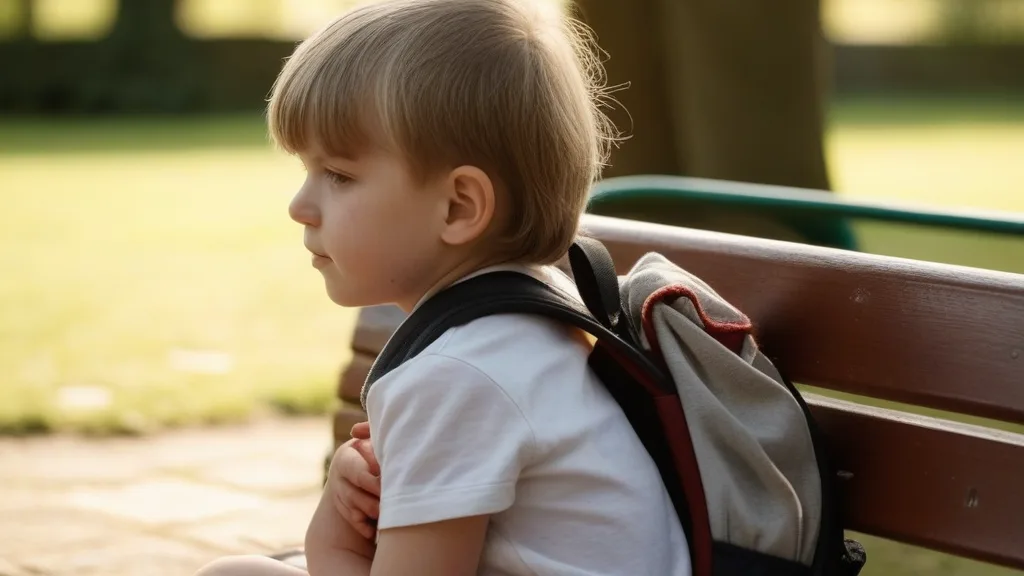
Did your day look like this too?
You pick up your child from preschool. The teacher says: “He had a wonderful time, ate all his lunch, helped clean up.”
You get in the car. 3 minutes pass.
And suddenly: screaming, crying, throwing shoes, “I DON’T WANT TO!”, “I HATE YOU!”.
What happened? Is the preschool lying to you?
No. This is After-School Restraint Collapse - and it’s completely normal.
What is ASRC?
After-School Restraint Collapse is a phenomenon where a child controls their impulses, emotions and behavior all day at preschool - and then “releases the brakes” at home.
Why does this happen?
Imagine it like this:
Your child has an internal self-control tank. In the morning it’s full. Throughout the day at preschool, the child draws from it:
- Waiting their turn to wash hands (depletion)
- Not responding to a classmate’s taunts (depletion)
- Sitting in circle time when they want to run (depletion)
- Sharing a toy they were just playing with (depletion)
- Eating lunch when they weren’t hungry (depletion)
By the end of the day the tank is empty.
Home = safe haven. Here they can finally be themselves. And… they explode.
Paradox: The better a child behaves at preschool, the bigger the explosion at home can be. It means they tried very hard.
The neuroscience behind it
Self-control works like a resource that gets depleted over the day — exactly like a tired muscle (the limited-resource model of self-control, Baumeister et al., Journal of Personality and Social Psychology, 1998). The longer a child’s prefrontal cortex has been working, the worse it “holds” by the end of the day.
What the research shows:
- Children in daycare/preschool show cortisol (stress hormone) levels that rise over the course of the day, instead of following the typical decline seen at home — the opposite of the normal daily rhythm (Watamura et al., Child Development, 2003)
- Home is where the tension built up during the day can finally be released — because the child feels safe there, not because something is wrong
In structured, child-led programs it can be even stronger
Why? Because environments that emphasize independence require even more self-control:
- Long work cycles (2-3 hours!)
- Independent choices (which require decisions)
- Maintaining order (impulse control)
This doesn’t mean these programs are bad. It means your child is really working hard.
Step by step: The “Soft Landing” Strategy
Right after preschool pickup, do these four things in this order — not all at once. Each step rebuilds one piece of the self-control tank before you move to the next.
1. Silence instead of questions
Common mistake: “How was it? What did you eat? Who did you play with? What did you do? Were you good?”
Why this doesn’t work: Bombarding with questions is more demands on a tired brain. The child has to search their memory, formulate answers, decide what to say - and they’re already empty.
What to do:
- Greet with a hug (no words)
- Just say: “I’m glad you’re here”
- Be silent
- Questions (if you must) - later, at dinner or before bed
2. Snack (protein!)
Why: Low blood sugar = shorter emotional fuse.
What to prepare:
- Hard-boiled egg (peeled!)
- Cheese cubes
- Hummus with vegetables
- Turkey slices
- Nuts (if no allergies)
What to avoid:
- Sweets (rapid spike and drop in sugar)
- Chips (empty calories)
- “Wait until dinner”
Pro tip: Have a snack ready IN THE CAR. Seriously.
3. Heavy Work
Sounds strange? It works.
Why: Proprioceptive activities (requiring strength) regulate the nervous system better than words.
Examples:
- Carrying groceries (even heavy ones!)
- Pushing the cart at the store
- Climbing on the playground
- Jumping on a trampoline
- Hanging on a bar
- Kneading dough
Bonus: Hands-on tasks like scrubbing a pot, kneading dough, or carrying heavy books work on the same principle.
4. “Yes” Zone (20-30 minutes)
What it is: Time when the child can do almost anything (safe) without hearing “no”, “careful”, “not like that”, “stop”.
What it looks like:
- No instructions
- No “educational” games
- No questions
- Parent is present but passive
- Child decides
Why it works: After a whole day of being directed, the child needs a sense of control. This half hour “refills the tank”.
What NOT to do
”Let’s talk about what happened”
Not now. A child in “collapse” mode is unable to talk rationally. The prefrontal cortex is offline.
”Behave, or else…”
Threats and punishments will make the situation worse. The child isn’t choosing this behavior - it’s happening.
”See, at preschool you know how to behave”
This won’t help. It adds shame to already difficult emotions.
”Go to your room until you calm down”
Isolation at this moment sends the message: “Your emotions are unacceptable”. Instead - be close, even in silence.
When to worry?
After-school restraint collapse itself is NORMAL — it’s a specific combination of signals, not the meltdown alone, that calls for a specialist. Consult one if:
- Explosions last longer than 30-45 minutes
- Child hurts themselves or others
- Collapse happens EVERY day with the same intensity
- You see signs of anxiety or depression (withdrawal, sleep problems, appetite changes)
- Preschool reports similar explosions there
Long-term perspective
ASRC isn’t permanent — it softens on its own as the child matures, and your role is to accompany that process, not rush it. It usually softens when:
- The child matures neurologically (prefrontal cortex develops)
- They get used to the preschool routine
- They learn self-regulation strategies
Your role: Not to “fix” the child, but to be a safe haven where they can discharge.
Practical checklist
Before pickup from preschool:
- Protein snack in bag/car
- Water to drink
- Mental preparation: “It might be difficult. That’s normal.”
Right after preschool:
- Hug, minimum words
- Snack
- Heavy work (if possible)
At home (first 30 minutes):
- “Yes” zone
- No demands
- Calm environment (quiet music or silence)
Later (after recovery):
- Can talk about the day
- Can introduce routine chores
- Child is “themselves” again
Final word
Next time your child bursts into tears in the car after preschool, remember:
This is not a bad child. This is a tired child.
And that tiredness comes from trying very hard - all day long, for complete strangers. And now they’re finally with you, so they can stop trying.
It’s a compliment. A difficult one to bear, but a compliment.
Sources
- Baumeister R.F., Bratslavsky E., Muraven M., Tice D.M., Journal of Personality and Social Psychology, 1998 — the limited-resource model of self-control (“ego depletion”): the capacity for self-regulation depletes after intensive use, much like a muscle after exertion: doi.org/10.1037/0022-3514.74.5.1252
- Watamura S.E., Donzella B., Alwin J., Gunnar M.R., Child Development, 2003 — study of cortisol in group child care: stress hormone levels rise over the day in daycare/preschool, the opposite of the typical daily decline: doi.org/10.1111/1467-8624.00583
- Shanker S., Self-Reg: How to Help Your Child (and You) Break the Stress Cycle and Successfully Engage with Life, Penguin, 2016 — theoretical framework of self-regulation (self-reg) as an alternative to willpower-based self-control.
- Siegel D.J., Bryson T.P., The Whole-Brain Child, Bantam Books, 2012 — integration of brain functions (prefrontal cortex vs. limbic system) in a child’s emotional regulation.
- Greene R.W., The Explosive Child, Harper Paperbacks, 2014 — the concept of “a child does well if they can” rather than “if they want to.”
Read also
Author
Dzieckologia Team
Like this topic?
📖 Browse all "schoolage" articles