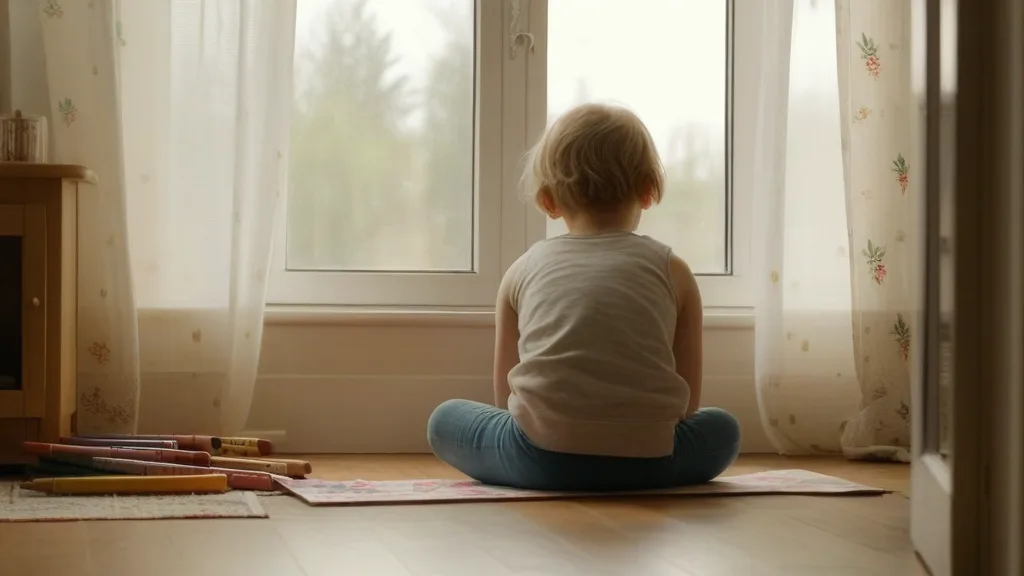
Your child is 3 years old and suddenly lying on the floor because you handed them their sandwich “the wrong way”? Or your 5-year-old is crying because “everyone’s laughing,” when they’re actually feeling shame?
Emotions in young children are like a tsunami – they hit hard and fast. But the good news: emotional regulation is a skill that can be trained through play. And without spending a penny.
Research from 2024–2026 (including meta-analyses on play-based learning and Zones of Regulation) shows that simple, everyday games build executive function, self-regulation, and emotional resilience better than any expensive cards or apps. Parents on Reddit (r/ADHD_Parenting, r/Montessori, r/ScienceBasedParenting) say it plainly: “Red Light Green Light saved our mornings,” “Freeze Dance replaced the tablet during meltdowns.”
In this article, you’ll find 10 proven, zero-cost games – from infants to early elementary. Each works on body and brain, fits into Montessori, Waldorf, or Reggio approaches, and has a version for neurodivergent children (ADHD, autism, high sensitivity).
Ready? Let’s go!
Why Do These Games Work? (Brief and Scientific)
Children ages 0–6 still have an immature prefrontal cortex – that’s the brain’s “brake pedal” for emotions. Games that combine movement + pause + naming emotions strengthen exactly those neural connections.
- Zones of Regulation (Leah Kuypers) – color-coded zones (red = explosion, green = calm) – the most effective tool of 2025.
- Harvard research 2025: 15 minutes daily of play-based self-regulation = +30% better concentration and fewer tantrums after 8 weeks.
- Reddit 2024–2026: thousands of parents confirm – “no equipment, and it works like magic.”
10 Smart Games – Ready to Play Today
1. Red Light, Green Light (Traffic Lights)
How to play: Child stands at one end of the room. You (or they) call “Green!” – they run. “Red!” – they freeze. Caught moving? Back to start.
Why it works: Trains inhibitory control (impulse suppression).
Montessori version: child calls the commands themselves – builds independence.
For neurodivergent kids: slower pace + visual cards (red/green cardboard from a drawer).
Reddit: “My ADHD child finally listens – played for 10 minutes and calmed down on their own.”
2. Freeze Dance
How to play: Turn on any music (phone). Dance together. Music stops – everyone freezes in a funny pose.
Why it works: Movement releases energy + pause teaches waiting.
Waldorf: fits perfectly into the daily rhythm (after lunch).
For autism: instead of music – counting to 10 (calmer stimulus).
Reggio version: child chooses the “dance theme” (“let’s dance like trees in the wind”).
3. Simon Says
How to play: “Simon says: jump!” – child does it. Without “Simon says” – they don’t.
Why it works: Builds listening and inhibition.
Montessori: child becomes “Simon” – practical life.
Neurodiverse: shorter commands + visual support (you demonstrate the movement).
4. Emotion Mirror (Emotion Charades)
How to play: You make a face (anger, joy, sadness) – child imitates and names it. Then switch roles.
Why it works: Teaches recognizing and naming emotions (“name it to tame it” – Daniel Siegel).
Reggio: “100 languages” – child invents new emotions.
For ADHD: seated version (on the carpet).
5. Belly Breathing Buddy
How to play: Place a stuffed animal on the child’s belly. “Let the bear ride the elevator” – inhale (belly up), exhale (belly down).
Why it works: Activates the vagus nerve – instant calming.
Waldorf: perfect before the bedtime story.
Ages 0–2: do it together on your own belly first.
6. Heavy Work – Carrying, Pushing, Pulling
How to play: “Let’s move all the pillows to the other room as fast as we can!” or “Push the wall with your whole body.”
Why it works: Proprioceptive input calms the nervous system (great for sensory seekers).
Montessori: practical life at home.
For autism: gold – reduces meltdowns by 50% according to parents.
7. Emotion Color Hunt
How to play: “Find something red in the room – that’s the color of anger. How do you feel when you see red?”
Why it works: Connects senses with emotions.
Reggio: child leads – “now blue = sadness.”
Waldorf version: outdoors – colors of nature.
8. Mother May I?
How to play: Child asks “Mother, may I take 3 jumps?” You decide (yes/no/differently).
Why it works: Practices patience and negotiation.
For neurodivergent kids: visual cards with steps.
9. Storytelling Emotions
How to play: You tell a story but pause: “How does the rabbit feel when the fox chases it? What would it do to calm down?”
Why it works: Waldorf in its purest form – narrative builds empathy.
Reddit: “My autistic child independently invented a ‘deep breathing’ strategy for the character.”
10. Emotion Wheel Circle
How to play: Sit in a circle. Everyone takes turns saying “I feel… because…” and makes a gesture.
Why it works: Builds emotional vocabulary and co-regulation.
Montessori: morning circle (circle time).
For siblings – a hit.
Comparison – Which Game for Which Age/Method?
| Age / Method | Best 3 Games | Main Benefit |
|---|---|---|
| Ages 0–2 | 5 (breathing), 6 (heavy work), 2 (freeze) | Sensory + calming |
| Ages 3–4 | 1, 3, 4 (lights, Simon, mirror) | Impulse control |
| Ages 5–6 | 7, 9, 10 (colors, story, circle) | Naming + empathy |
| Montessori | 1, 3, 6 | Independence + practice |
| Waldorf | 2, 5, 9 | Rhythm + imagination |
| Reggio | 4, 7, 10 | Child leads the topic |
| ADHD / autism | 6, 1, 5 | Heavy work + structure |
How to Introduce at Home – 7-Day Plan
- Monday–Friday: one game after lunch (10–15 min).
- Weekend: choose 2 favorites together and record a video of “how we play at home.”
- Track progress: “Remember when you were in the red zone yesterday? What did you do?”
Want a ready-made PDF checklist “10 Games + Emotion Cards to Print”? Sign up for our newsletter – we’ll send it in 5 seconds.
Summary
Emotional regulation isn’t “magic” – it’s a skill we build through play. These 10 games cost nothing, work immediately, and grow with your child.
Parents on Reddit write: “We started with Red Light Green Light and after a month – less crying, more words about emotions.” You can do it too!
Which game will you try first today? Write in the comments (or on IG) – we’ll suggest a modification for your child.
And in the next article, we’ll dive into neurodiversity in practice – how these same games work for ADHD and autism.
Read also
- Emotional Intelligence at Ages 3-7
- The Peace Corner: A Tool for Emotional Regulation
- After-School Restraint Collapse
Frequently Asked Questions
At what age can I start playing emotion regulation games with my child?
You can begin as early as infancy with the simplest games like belly breathing (game #5) and heavy work activities (game #6). By age 2-3, children can participate in Freeze Dance and Red Light Green Light with simplified rules. The games naturally scale in complexity, so you just adjust the difficulty to match your child’s developmental stage.
How long does it take to see real improvements in my child’s emotional regulation from these games?
Most parents report noticeable changes within 2-4 weeks of playing consistently for about 10-15 minutes daily. You might see fewer tantrums, more willingness to use words for emotions, and quicker recovery from meltdowns. The key is daily consistency — sporadic play once a week will not build the neural pathways needed for lasting self-regulation.
My child has ADHD and cannot sit still for any structured activity — which game should I start with?
Start with Heavy Work (game #6) — carrying pillows, pushing walls, jumping on a trampoline. Proprioceptive input calms the nervous system naturally and requires no sitting or waiting. Once your child is in a calmer state after heavy work, you can transition to a short round of Red Light Green Light, which many ADHD parents call their most effective tool for building impulse control.
Author
Dzieckologia Team
Tags:
Like this topic?
📖 Browse all "schoolage" articles