The Elephant in the Room (Literally)
You open Pinterest. “Perfect child’s room.”
You see: 430 sq ft playroom with floor-to-ceiling windows, wooden shelves full of learning materials at $50 each, a rug that costs as much as your monthly mortgage payment.
You close Pinterest.
You look at your small 3-room apartment. Children’s room 97 sq ft (shared with siblings?). Living room that’s also the dining room, office, and where you’ve hidden laundry on a line because your neighbor complains about the balcony.
Can you support your child’s development here?
Yes. And this article will show you how.
Child Development Isn’t About Square Footage
Maria Montessori created her first Casa dei Bambini (Children’s House) in poor neighborhoods of Rome. Not in villas. In cramped, crowded tenement buildings.
Key principles for a child-friendly space:
- Accessibility (child can reach independently)
- Order (a place for everything)
- Simplicity (less = more)
- Beauty (pleasing to the eye)
None of these principles require large space.
Room by Room: Practical Plan
Entryway (usually ~43 sq ft)
Problem: Jackets, shoes, bags, stroller, scooter. Solution:
| Need | Solution | Cost |
|---|---|---|
| Coat hook | Self-adhesive hook at child’s height | $0.50-$1 |
| Shoe area | Mat/pad and ONE stool | $0-$3 |
| Mirror | Adhesive 12x12” mirror at bottom of door | $2 |
| Exit routine | Picture list “jacket→shoes→hat” | $0 (printout) |
Key: Designate ONE shelf or floor space ONLY for the child. The rest can be adult chaos - the child has their order.
Kitchen
Problem: Everything high, hot, dangerous. Solution:
Learning Tower:
- Store-bought: $50-$100
- DIY from IKEA BEKVÄM stool + rails: ~$20
- Even cheaper: stable stool + your presence
One lower drawer = Child’s space:
- Plastic cup (they can get themselves)
- Small bowl
- Spoon, fork
- Small pitcher of water (filled in the morning)
Cost: $0 - use what you have, just change the location.
Activities possible in a small kitchen:
- Washing vegetables in the sink
- Peeling tangerines
- Cutting banana (safety knife: ~$5)
- Pouring water from pitcher to cup
- Wiping the table after eating
Living Room (often = only “playroom”)
Problem: There’s a TV, couch, your stuff, and somehow the child needs to fit. Solution:
“Bottom Shelf” Strategy: Don’t buy a designer activity shelf for $200. Use what you have:
- Bottom shelf of TV stand = toy shelf
- Bottom shelf of bookcase = child’s books (covers facing forward)
- Chest by the couch = art materials
Toy Rotation (Game changer!):
- Choose 6-8 toys/activities
- Arrange on accessible shelf
- The rest - to basement, attic, top shelf
- Every 2 weeks - rotate
Result:
- Less clutter
- Child concentrates better
- “New” toys without buying
Work mat: Small rug (IKEA STOENSE, ~$12) = designated work area. Child brings material TO the mat, works, returns. Rest of the room - untouched.
Bathroom
Problem: Everything too high. Solution:
| Element | Solution | Cost |
|---|---|---|
| Water access | Faucet extender (flexible) | $2-$5 |
| Reaching sink | IKEA FÖRSIKTIG step stool | $10 |
| Toothbrush | In cup at accessible height | $0 |
| Towel | Small towel on low hook/hanger | $0 |
Hand washing routine (pictures on mirror):
- Sleeves up
- Water
- Soap
- Rinse
- Turn off water
- Towel
Children’s Room (even 86-97 sq ft)
Bed:
- Mattress on floor (free!) = independence
- Low house bed ($75-$125 used)
- NO: Bed with rails that the child can’t get into alone
Clothes:
- Bottom dresser drawer = child’s current clothes
- 2-3 outfits they can choose THEMSELVES (not the whole wardrobe!)
- Small standing rack or wall hooks at child’s height
Activity shelf:
- One low shelf is enough
- 5-6 items: puzzle, blocks, book, sensory material, something to draw with
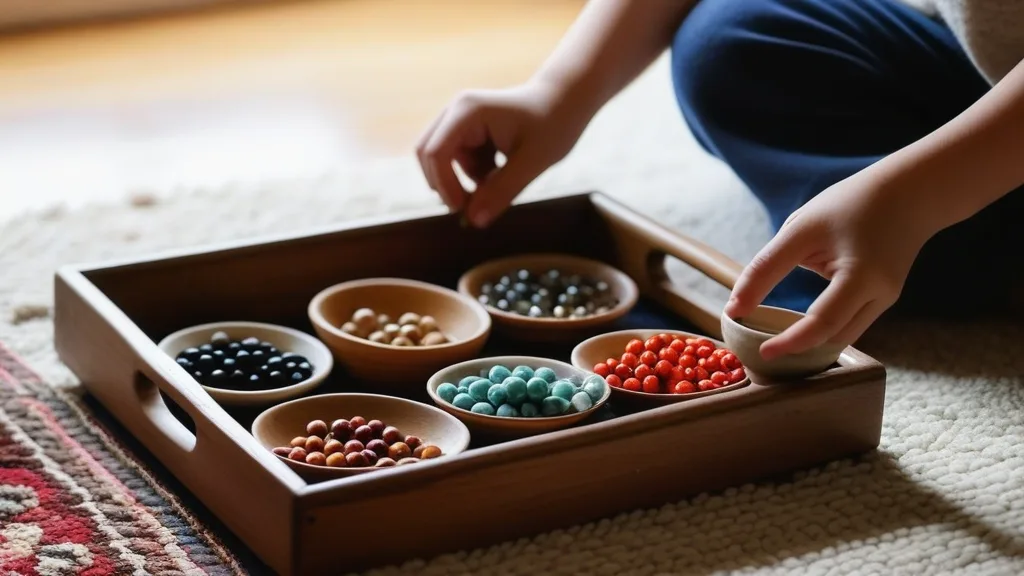
- Trays or baskets organize materials
Rotation Storage - Where to Hide the Rest?
In apartment without basement:
- Top shelves of closets (adults can easily reach)
- Containers under parents’ bed
- Loft (if you have one)
- Storage boxes on balcony (waterproof)
Organization:
- IKEA SAMLA containers with description/photo of contents
- Rotation every 2 weeks (calendar on phone = reminder)
- “One in, one out” - new toy = old one to rotation or donation
Budget Solutions (local stores)
Dollar stores / discount stores (total ~$12)
- Small plastic pitchers (pouring)
- Wooden/plastic trays
- Small sorting bowls
- Sponges in different colors
- Kitchen tongs (grasping)
- Microfiber cloths (wiping)
IKEA (up to ~$25)
- TROFAST shelf + containers (lowest model)
- BEKVÄM stool (learning tower DIY)
- FÖRSIKTIG bathroom step
- MALA double-sided easel
- DUKTIG kitchen accessories
Online marketplaces (used!)
- Wooden blocks (often $8-$12 per set)
- Wooden puzzles
- Sensory materials
- Floor bed
Free (from home)
- Beans for pouring
- Plastic bottles of different sizes
- Socks for matching
- Spoons of different sizes
- Stacking cups
- Cardboard boxes (piggy bank, house)
Most Common Mistakes in Small Spaces
1. “Since there’s little space, at least let there be lots of toys”
Opposite! The less space, the fewer things. 6 toys in clear order > 40 in chaos.
2. “I’ll buy furniture they’ll ‘grow into’”
Tall shelves “because they’ll grow” = child now can’t see or reach anything.
3. “Child’s room = only play space”
The child wants to be WHERE you are. Kitchen corner, living room - that’s where they spend time.
4. “I must have all the special educational materials”
You don’t. Everyday activities available at home — cooking, cleaning, getting dressed — are the foundation of hands-on learning. The rest is extra.
Case Study: Our 517 sq ft (3-room apartment from the 80s)
Layout: entryway, kitchen, living room with dining area, parents’ bedroom, child’s room (86 sq ft).
What we did:
| Room | Change | Cost |
|---|---|---|
| Entryway | 3 hooks on mounting tape at low level | $3 |
| Kitchen | Bottom drawer = child’s things, stool | $0 + $12 |
| Living room | Bottom shelf = 6 toys, work mat | $12 |
| Bathroom | Faucet extender, step stool | $14 |
| Child’s room | Mattress on floor, one low shelf, 3 hooks | $10 |
Total: ~$51
Final Word
Good child development doesn’t live in beautiful catalogs. It lives in the mind of a parent who understands that:
A child needs access, not wealth.
Your 540 sq ft is enough. Your small apartment is enough. Your IKEA cabinet is enough.
You are enough too.
Practical Starter List
This weekend - do this:
- Choose 6 toys, hide the rest
- Find one bottom shelf/drawer for the child
- Stick one hook in the entryway at child’s height
- Move child’s cup and plate to bottom kitchen drawer
Cost: $0-$5. Time: 1 hour. Result: Immediate.
Bibliography
-
Montessori, M. (1912). “The Montessori Method.” Frederick A. Stokes Company.
-
Seldin, T. & Epstein, P. (2003). “The Montessori Way.” Todd Allen Printing.
-
Lillard, P. P. (1996). “Montessori Today.” Schocken Books.
Read also
- How to Choose a Good Preschool: Complete Checklist for Parents
- Educational Materials on a Budget: 50 Finds from Dollar Stores
- Grandparents and Parenting: How to Build Bridges Instead of Walls
Frequently Asked Questions
Do I really need a separate playroom to support my child’s development?
Absolutely not. Children develop beautifully in small spaces when the environment is thoughtfully organized. What matters is child-height accessibility, order, and a few well-chosen materials — not square footage. A single low shelf in the living room corner with 5-6 rotating activities can be more effective than a huge, cluttered playroom. Focus on making your existing space work for your child rather than wishing for a bigger one.
How do I handle toy rotation when I have very limited storage space?
Use vertical space and hidden storage creatively — the top of wardrobes, under-bed bins, or a labeled box in a closet. Keep only 5-8 toys/activities accessible at a time and swap them every 1-2 weeks. When “old” toys reappear after a few weeks in storage, children greet them with renewed excitement. This approach actually works better in small apartments because it forces you to be intentional about what’s out.
Can siblings of different ages share a small space without constant conflict?
Yes, with some planning. Divide the shared space into zones rather than “my side/your side” — a calm reading corner, an active play area, and a work surface. Give each child one personal shelf or basket that’s exclusively theirs. Stagger activities so both children aren’t competing for the same space simultaneously. Shared small spaces can actually teach cooperation and respect for others’ work better than separate rooms.
Author
Dzieckologia Team
Like this topic?
🎯 Browse all "Methods in practice" articles