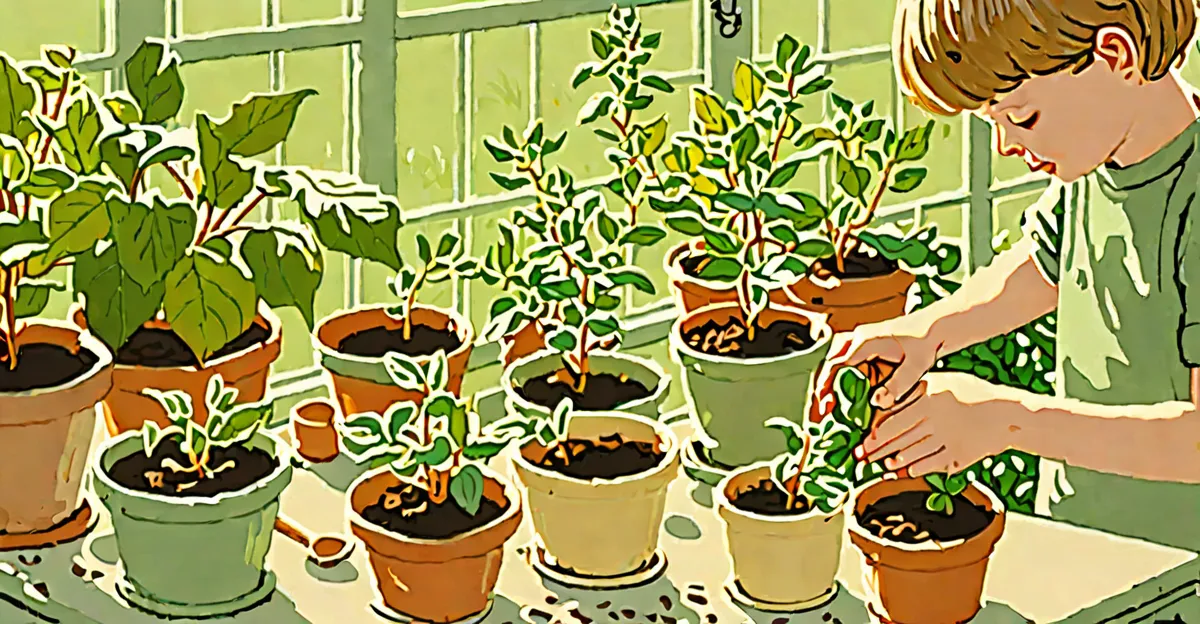
Your child asks 300 questions a day. “Why is the sky blue?” “Why does the dog have a tail?” “Why do you have hair on your legs but Mom doesn’t?”
And then suddenly, around age 6–7, they stop asking. They sit at a desk, wait for answers, and repeat what they’ve heard.
What happened?
Harvard research (2024–2025) shows that curiosity isn’t an inborn trait that “disappears” – it’s a skill that requires practice. Like a muscle: either you train it or it atrophies. The problem is that most adults (parents and teachers) unconsciously extinguish it – by giving ready-made answers instead of fueling questions.
In this article, you’ll learn:
- What the “information gap” is and why it’s the most powerful tool for building curiosity
- How Waldorf and Reggio approach curiosity completely differently than traditional school
- 8 simple experiments to do at home (ages 0–6, zero cost)
- How to adapt this for neurodivergent children (ADHD, autism, high sensitivity)
What Is the “Information Gap”? (The Science in 2 Minutes)
George Loewenstein of Carnegie Mellon described a simple principle in his information gap theory: curiosity appears when we know SOMETHING but not EVERYTHING.
Imagine:
- You tell your child: “Water freezes at 0 degrees” → child nods and moves on
- You say: “What do you think will happen if we put a cup of water AND a cup of juice in the freezer?” → the child HAS to see
The difference? In the first case, you closed the information gap. In the second – you opened it.
2025 research confirms:
- Children who regularly experience “information gaps” show 40% more exploratory behavior compared to controls
- The effect grows over time – curiosity builds curiosity (snowball effect)
- Children with ADHD respond to “gaps” even more strongly than neurotypical peers – novelty and surprise activate their dopamine system
Waldorf and Phenomenology: Experience First, Name Later
Rudolf Steiner had one brilliant intuition that modern neuroscience confirms: a child should FIRST experience a phenomenon, THEN hear the explanation.
In traditional school, it’s reversed:
- Teacher says: “Light breaks into colors”
- Child memorizes the definition
- Maybe someday they’ll see a rainbow
In Waldorf:
- Child sees a rainbow (or a prism on the windowsill)
- Child asks: “Why?!”
- Teacher guides observation: “What do you see? How many colors? When do they disappear?”
- Only then (maybe the next day): “This is called light refraction”
This is phenomenology – an approach where experience precedes theory. And it’s powerful because:
- It builds intrinsic motivation (the child WANTS to know because they SAW)
- It creates an emotional connection to knowledge (surprise → curiosity → understanding)
- It trains observation instead of passive listening
Reggio: The Child as Researcher (Not Student)
Reggio Emilia adds yet another dimension: the child decides what to investigate.
In Reggio, the teacher doesn’t plan lessons. Instead:
- Observes what interests the child
- Creates a “provocation” (invitation to investigate)
- Documents the process (photos, drawings, child quotes)
- Follows the child – even if the project goes in an unexpected direction
A real example: children found a dead beetle on a walk. The teacher didn’t say “that’s a dung beetle.” Instead, they brought magnifying glasses, paper, and crayons. The children drew the beetle for 3 days. Then they asked: “Where does it live? What does it eat? Why did it die?” The project lasted 2 weeks and covered biology, art, emotions (sadness about death), and math (counting legs).
This is curiosity in its purest form. The child isn’t “learning about insects” – the child is INVESTIGATING insects because they WANT to.
8 Curiosity Experiments at Home (Ages 0–6, Zero Cost)
Experiment 1: “What Will Happen If…?” (Age: 2+)
Setup: cup of water, cup of juice, freezer.
How to play:
- “What do you think will happen if we put both cups in the freezer?”
- Child guesses → draw/write the prediction
- Put cups in → wait 2 hours
- Check together: “Did what you thought actually happen?”
Why it works: Classic information gap + scientific method (hypothesis → experiment → observation).
For ADHD: short cycle (2 hours, not 2 days). Visual timer for waiting.
Experiment 2: Mystery Box (Age: 1+)
Setup: a box with a hand-sized hole, 3 objects with different textures inside.
How to play:
- “Put your hand in. Don’t look! What do you feel?”
- “Is it soft? Hard? Cold?”
- Child guesses → pulls it out → checks
Why it works: Sensory gap – the brain HAS to find out what’s inside.
Waldorf: use natural materials (pinecone, stone, wool).
For autism: warn about textures (“there will be soft and hard things, nothing prickly”). For touch-averse children – visual version (covered with a cloth, child peeks).
Experiment 3: Weekly Curiosity Card (Age: 3+)
Setup: an A4 sheet divided into 7 sections (days of the week).
How to play:
- Each day, the child (or you for them) draws/writes “one question of the day”
- “Why do leaves fall?” “Where do bubbles come from?”
- On the weekend, pick 1 question and TOGETHER find the answer (book, experiment, walk)
Why it works: Ritualizes curiosity. The child learns that questions are VALUABLE.
Reggio: this is documentation in its purest form.
Printable: download a ready-made “Curiosity Card” from our newsletter.
Experiment 4: Window Prism (Age: 2+)
Setup: a glass of water on the windowsill on a sunny day (or an old CD).
How to play:
- Position the glass so light creates a rainbow on the wall/floor
- DON’T say “this is light refraction”
- Ask: “What do you see? Where does it come from? What happens if I move the glass?”
- Let the child experiment for 15–30 minutes
Why it works: Waldorf phenomenology – experience BEFORE explanation.
For HSC (high sensitivity): quiet observation. Don’t rush. Sensitive children often sit and watch – that IS their way of investigating.
Experiment 5: “Before I Tell You – Guess” (Age: 3+)
Setup: none – this is a conversational technique.
How to play:
- Instead of answering the child’s question immediately, say: “Great question! Why do YOU think?”
- Child guesses (even absurdly)
- “Interesting! Shall we find out?”
- THEN give the answer (or search together)
Why it works: Extends the information gap. The child learns that THINKING matters more than KNOWING.
For ADHD: short exchange (2–3 hypotheses, not 10). Then action.
Experiment 6: Nature Observatory (Age: 2+)
Setup: magnifying glass (or phone with zoom), a patch of garden/park.
How to play:
- “Today we’re scientists. Our mission is to find something we’ve never seen before.”
- Observe 1 square meter of ground for 10 minutes
- Draw what you found
- Return to the same spot in a week – “What changed?”
Why it works: Waldorf (nature observation) + Reggio (documentation) + information gap (what will change?).
For autism: hyperfocus on one object = ideal. Don’t interrupt if the child watches an ant for 20 minutes.
Experiment 7: Reversed Fairy Tale (Age: 4+)
Setup: none.
How to play:
- Tell the beginning of a familiar story but CHANGE one element
- “Little Red Riding Hood walked through the forest, but this time… the wolf WAS NICE. What would happen?”
- Child finishes the story
- “And what if Grandma were the wolf?”
Why it works: Narrative gap – the brain HAS to complete the story. Builds creative thinking and empathy.
Waldorf: storytelling in its purest form.
For ADHD: short stories (5 sentences, not 50). The child can move around while telling.
Experiment 8: Kitchen Laboratory (Age: 3+)
Setup: vinegar, baking soda, food coloring (optional), a tray.
How to play:
- “What do you think will happen when we pour vinegar into baking soda?”
- Child guesses → you try
- “And what about lemon juice? Water? Milk?”
- Draw each result on paper
Why it works: Classic information gap. Each new substance = new gap. The child can’t resist checking.
Montessori: child measures, pours, and cleans up – practical life + science.
For neurodivergent kids: prepare for mess. Put down an apron/mat. Sensory note – vinegar has a strong smell, warn about it.
Table: Which Experiment for Which Age/Method?
| Age | Best Experiments | Approach |
|---|---|---|
| Ages 0–2 | 2 (box), 4 (prism), 6 (observatory) | Sensory, calm |
| Ages 3–4 | 1 (freezer), 3 (card), 5 (guess), 8 (kitchen) | Active, short cycles |
| Ages 5–6 | 3 (card), 6 (observatory), 7 (story), 8 (kitchen) | Projects, documentation |
| Montessori | 1, 5, 8 | Independence + hypothesis |
| Waldorf | 4, 6, 7 | Observation + narrative |
| Reggio | 2, 3, 6 | Documentation + child leads |
| ADHD | 1, 5, 8 | Short, dynamic, with WOW effect |
| Autism/HSC | 2, 4, 6 | Calm, sensory, with predictability |
5 Rules for “Killing Curiosity” (What NOT to Do)
- Don’t answer immediately. “Why does it rain?” → “Great question! Why do you think?” instead of a lecture on the water cycle.
- Don’t correct hypotheses. Child says “Rain is cloud tears”? Don’t say “no, it’s condensation.” Say: “Interesting! How could we test that?”
- Don’t interrupt observation. Child watches an ant for 15 minutes? That’s not “wasting time.” That IS learning.
- Don’t buy answers. “Alexa, why is the sky blue?” closes the gap in 3 seconds. Keep voice assistants away when the child is exploring.
- Don’t over-plan. The best experiments are SPONTANEOUS. Child found a snail? A project just started.
What Does 2025–2026 Science Say?
- Curiosity activates the reward system (dopamine) in the brain – the same pathway as food and play. Children who regularly experience “aha!” moments have stronger connections in the hippocampus (memory center).
- Curiosity-driven learning beats traditional methods in knowledge retention by 35–50% (2025 meta-analysis).
- Children with ADHD have a naturally stronger response to novelty and surprise – this isn’t a flaw, it’s a superpower if you channel it well.
- Open questions (Waldorf/Reggio) vs closed questions (traditional school): children who ask more open questions show better creative problem-solving scores 2 years later.
Summary: Become a “Provocateur,” Not a “Teacher”
The most important change you can make as a parent? Stop giving answers. Start giving questions.
You don’t need to be an expert in physics, biology, or pedagogy. You need to be the person who says:
- “Great question! What do you think?”
- “What will happen if…?”
- “Let’s find out together!”
This is the essence of Waldorf (experience before theory), Reggio (child as researcher), and modern neuroscience (information gap as the engine of learning).
Your child is born with curiosity. Your job isn’t to “build” it – it’s to not extinguish it.
Want a ready-made “Weekly Curiosity Card” to print? Sign up for our newsletter – we’ll send the PDF right away.
Next article: loose parts play and open-ended toys – why they’re better than “Instagram Montessori.”
Read also
- ChatGPT for Parents: How to Use AI Wisely
- Low-Stim Parenting: A Digital Detox Guide
- Modern adaptations 2026: Montessori + STEAM + neuroscience
Frequently Asked Questions
My child stopped asking “why” questions — did I do something wrong?
Not necessarily, but it’s worth examining how questions have been received at home and school. If children consistently get quick, closed answers or are told “not now,” they learn that asking isn’t valued. The good news is that curiosity can be rekindled at any age — start by wondering aloud yourself (“Hmm, I wonder why puddles disappear…”) and leaving questions open rather than rushing to Google the answer.
How do I encourage curiosity without turning everything into a “learning moment”?
Children can sense when a parent is secretly trying to teach them, and it kills the joy of discovery. The best approach is to follow your child’s lead rather than steering the conversation toward what you think they should learn. If they’re fascinated by a worm on the sidewalk, get fascinated with them — don’t immediately launch into a biology lesson about invertebrates.
Is too much screen time really killing my child’s curiosity?
Research suggests it’s not screens themselves but passive consumption that’s the problem. A child watching endless autoplay videos is having their curiosity fed for them, which weakens the “curiosity muscle.” Interactive, child-directed screen use (like building in Minecraft or exploring a nature app) is very different from passive scrolling — the key is whether your child is asking questions or just absorbing content.
Author
Dzieckologia Team
Tags:
Like this topic?
🚀 Browse all "Future" articles