Instagram vs Reality
I open Instagram. A perfectly arranged “sensory bin”:
- Colorful rice in rainbow shades
- Plastic dinosaurs
- Perfect lighting
- Smiling child in clean clothes
I open my living room after an attempt:
- Rice on the floor, couch, in a shoe
- Dinosaurs in rice, rice in dinosaurs
- Crying child because “it’s not right!”
- Me with a broom asking “why did I do this?”
Is sensory play overhyped?
What science says about sensory play
Confirmed facts:
- Sensory integration is important for development
- Diverse experiences build neural connections
- Touch, movement, proprioception support learning
But…
These benefits DO NOT require colorful rice or shaving cream.
Children develop their senses through:
- Daily activities (cooking, laundry, cleaning)
- Play in nature (sand, mud, water)
- Manipulation of real objects
A more focused approach to the senses
Maria Montessori created an extensive sensory education program over a century ago. Research continues to support its core insight: focused sensory experiences beat overwhelming ones. Here’s how the approaches differ:
Key differences:
| Sensory bin (Instagram) | Focused approach |
|---|---|
| Many stimuli at once | Isolation of one quality |
| Chaos (mixing) | Order (sequence) |
| Free play | Purposeful exercise |
| ”Wow” effect | Deep concentration |
| Single use | Multiple repetitions |
Example:
“Autumn” sensory bin: Colorful leaves + chestnuts + acorns + pinecones + plastic insects + spoons + cups + everything mixed together.
Focused approach:
- DAY 1: Just leaves. Different shapes. We compare.
- DAY 2: Just chestnuts. We sort by size.
- DAY 3: Leaves vs chestnuts. What’s smooth? What’s rough?
Which develops the senses better? The focused approach. Because the brain can focus on ONE quality instead of being overwhelmed by everything at once.
Is sensory play bad?
No. But:
When sensory play makes sense:
-
As exploration (not a “lesson”) The child plays, touches, explores - without expectations of “learning” something.
-
When it’s simple Water + cups. Sand + shovel. Beans + jars. Not: 17 colors of rice + 23 accessories.
-
When the child needs it Some children LOVE touch and need lots of stimulation. Others - avoid it. Observe your child.
-
When you have energy for cleanup Seriously. If sensory bin = your stress and yelling “don’t take that out of the bowl!” - skip it.
When sensory play is a waste of time:
-
When you’re doing it for Instagram The child doesn’t need a perfect installation. They need your presence.
-
When it’s the only “developmental” thing you do A sensory bin once a week won’t compensate for lack of daily experiences.
-
When the child isn’t interested Forcing a 4-year-old to dig in rice because “it’s developmental” = pointless.
-
When it’s another “lesson” “Now sort by color!” - if the child just wants to mix, let them mix.
Alternatives to sensory bins
Daily life (the best!)
- Kitchen: Mixing dough, washing vegetables, cutting (appropriate knives)
- Bathroom: Pouring water, washing dishes, washing socks
- Garden: Digging, planting, collecting leaves
- Cleaning: Sweeping, wiping, folding laundry
This IS sensory play. Just without the colorful rice.
Nature (free!)
- Mud (the world’s best “sensory bin”)
- Sand at the beach/playground
- Water in any form
- Snow, ice, icicles
- Leaves, chestnuts, pinecones (unprocessed!)
Structured sensory materials (purposeful)
- Touch tablets (different textures)
- Weight bags (different weights)
- Scent bottles (different scents)
- Bells (different tones)
One sense, one quality, deep concentration.
If you want to do sensory play - how to do it well
Rule 1: Less is more
3-4 elements, not 15.
Yes: Water + cups + funnel No: Water + colored foam + glitter balls + plastic fish + shells + …
Rule 2: No pressure
The child can play for 2 minutes or 20. Both options are okay.
Rule 3: Your presence > installation
Simple sensory bin + present parent > complicated bin + parent scrolling phone
Rule 4: Easy cleanup
- Lay down plastic/oil cloth
- Choose dry materials (easier than wet)
- Prepare brush/vacuum
- “Messy” clothes
Rule 5: Repeatability
A good sensory bin can be repeated. The child deepens the experience with each contact.
Recipes for simple (and sensible) sensory play
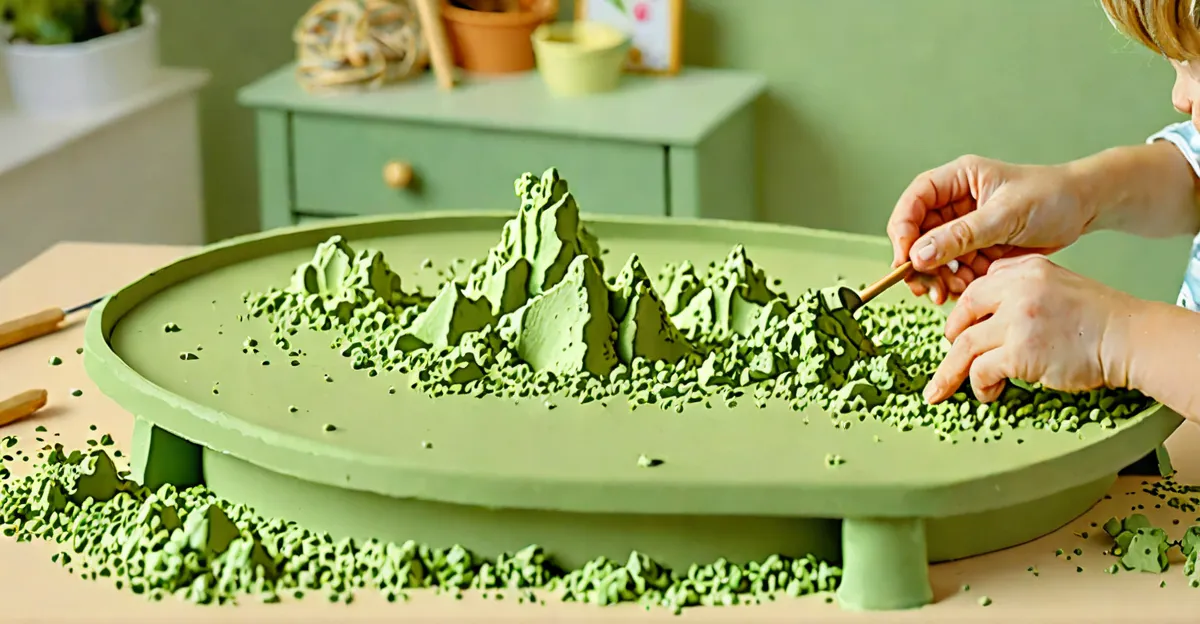
1. Sand/grain tray
- Flat tray (or lid)
- Kinetic sand / semolina / rice
- Stick or finger
The child draws, traces letters, creates patterns. Goal: Hand preparation for writing + relaxation.
2. Water pouring
- 2-3 containers of different sizes
- Pitcher
- Funnel
- Sponge
A classic activity. Never gets boring. Goal: Coordination, concentration, calm.
3. Sorting natural materials
- Chestnuts, acorns, pebbles
- Sorting bowls
Each material into a separate bowl. Goal: Classification, motor skills, order.
4. Digging in soil
- Pot with soil
- Shovel
- “Treasures” to bury and uncover
Real soil > colorful rice. Goal: Hand strength, exploration, nature.
5. Ice melting
- Small toys frozen in ice
- Warm water for pouring
- Salt for melting
Learning and play in one. Goal: Experiments, patience, states of matter.
Read also
- DIY Sensory Materials: 10 Ideas for Home
- Does Montessori Kill Creativity? Debunking the Myth
- Loose Parts Play and Open-Ended Toys
FAQ
”Is colorful rice bad?”
It’s not bad. It’s just not magically “developmental”. If you want to and have the energy - do it. If not - the child loses nothing.
”Is slime okay?”
For some children - great (they love the texture). For others - disgusting. Don’t force it. And check the ingredients!
”How much sensory play does a child need?”
If the child has access to nature, daily activities, and diverse toys - they don’t need ADDITIONAL “sensory play”.
”My child doesn’t want to touch wet things?”
This could be sensory sensitivity. Respect it. Don’t force it. Offer alternatives (dry materials).
Summary
Sensory play is a tool, not a goal.
You don’t need:
- Perfect installations from Instagram
- Colorful rice and glittery slime
- Hours of preparation
You need:
- Daily experiences (kitchen, nature, cleaning)
- Simple materials for manipulation
- Presence and observation
- Peace (yours!)
The best “sensory bin” is:
- A puddle after rain
- A sandbox
- A bowl of warm water and dishes
Free, no preparation, truly developmental.
Instagram can wait.
This article was created based on sensory education research, including Maria Montessori’s foundational work, sensory integration studies, and observations from practicing parents.
Author
Dzieckologia Team
Like this topic?
🏠 Browse all "Practical life" articles