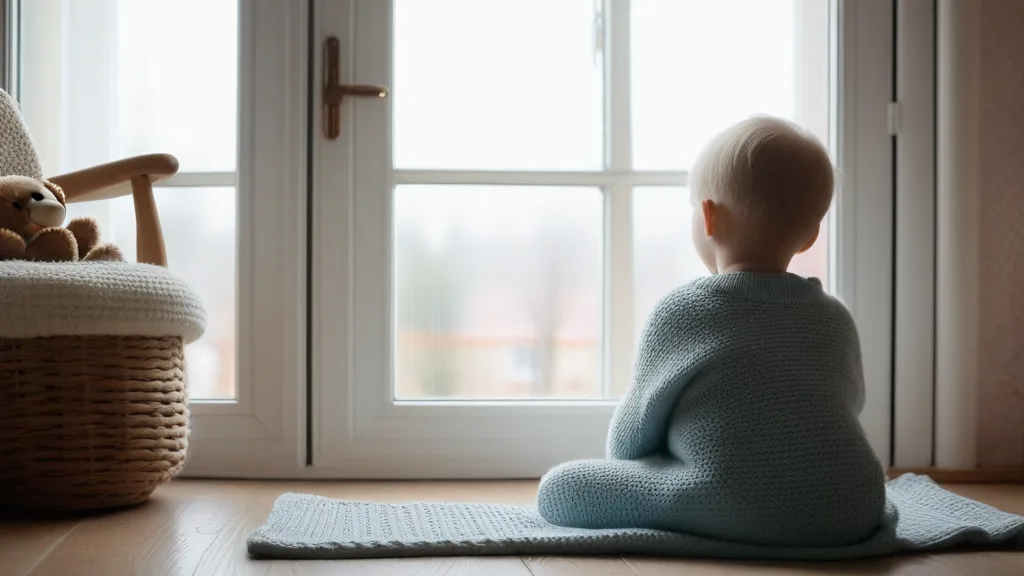
“Go to the corner and think about your behavior!”
Did you hear this as a child? I did.
I remember the corner. The wall. The humiliation. Thinking about my behavior? Zero. But plenty of anger and shame.
The Quiet Corner is something completely different. It’s not a place of punishment. It’s a safe haven where a child can calm down when emotions are too big.
And yes - it works. But only if you do it right.
What is a Peace Corner?
Peace Corner (Quiet Corner) is a designated space at home where a child can:
- Calm down when overwhelmed
- Process difficult emotions
- Regain control over their body
- Return to balance
What it is NOT:
- A place of punishment
- Isolation
- “Time-out” with a new name
- A room you send your child to by force
Neurobiology: Why it works
When a child is in emotional turmoil (tantrum, aggression, crying), their amygdala (fear center and fight-or-flight response) takes control.
In this state:
- The prefrontal cortex (logic, language) is OFFLINE
- The child literally CANNOT “use their words”
- Hearing “calm down” only escalates things
What helps:
- Sensory input (touch, weight, cold)
- Reduced stimulation (quiet, dim light)
- Presence of a safe person (not solitude)
- Time
The Quiet Corner provides all these elements.
How to create a Quiet Corner (step by step)
Step 1: Choose a location
Ideal location:
- Corner of a room (two walls = sense of security)
- Close to where the parent is (not in isolation!)
- Away from TV and noise
- Small enough to be cozy
In a small apartment:
- Corner of bedroom by the bed
- Part of a closet (open)
- Behind an armchair in the living room
- Tent/tipi (doesn’t have to be expensive)
Step 2: Equipment (list with prices)
| Item | Why | Cost |
|---|---|---|
| Soft rug/mat | Space boundary, comfort | $8-12 |
| Pillow or bean bag | Comfort, ability to hug | $8-15 |
| Weighted blanket OR regular heavy blanket | Proprioceptive stimulation | $12-40 |
| Calm down jar (glitter jar) | Visual metaphor for calming | $3-5 DIY |
| Stress ball | Release tension in hands | $1-3 |
| One book about emotions | Naming feelings | $5-10 |
| ”Guardian” stuffed animal | Comfort, transitional object | $0 (existing) |
Minimal version ($20): rug + pillow + calm down jar.
Step 3: Calm Down Jar (DIY)
You need:
- Jar with lid (e.g., from jam)
- Glitter glue or glitter + glycerin
- Warm water
- Glue to seal the lid
Instructions:
- Fill jar with warm water to 3/4
- Add 2-3 tablespoons of glitter glue (or glycerin + glitter)
- Close, seal lid with glue
- Shake and observe
How to use: “Look how the glitter is everywhere now - just like your emotions. Let’s wait for it to settle to the bottom. Let’s breathe together.”
Most important: HOW to introduce the corner
Mistake #1: Introducing during a crisis
“Oh, you’re having a tantrum? Come, I’ll show you a new place!” NO. Not now.
Proper introduction:
Stage 1: Presentation (calm moment)
- Choose a moment when the child is in a good mood
- “I want to show you something special”
- Sit together in the Corner
- Show each element, let them touch
- Shake the jar together
Stage 2: Modeling (You use it) Over the next few days:
- “Mom is a bit stressed. I’m going to the Quiet Corner for a moment.”
- Sit down, breathe, come back
- Child observes, learns
Stage 3: Using together When you see emotions building:
- “I see you’re angry. Let’s go to the Quiet Corner together.”
- Go WITH the child, don’t send them alone
- Sit next to them, breathe
Stage 4: Independent use Over time, the child will start going there on their own. (This can take weeks. Don’t force it.)
Rules of use (for parents)
1. Never send by force
If the child doesn’t want to go - let it be. Offer, don’t force. “Maybe you’ll sit in the Corner?” ≠ “GO TO THE CORNER!“
2. Young children (2-3 years) need company
A two-year-old alone in a corner = abandonment. Go with them. Hug. Be there.
3. Don’t set a timer
“Sit here for 5 minutes” = punishment. The child leaves when ready.
4. Don’t talk too much
In the middle of a storm - be silent. Breathe loudly (child mimics). Rub their back. Words - later.
5. Talk AFTER
When the child calms down and returns: “What did you feel?” “Next time you can go to the Corner when you feel it’s too much."
"But my child destroys the Corner!”
It happens. A child in rage may:
- Throw pillows around
- Kick the wall
- Scream
What to do:
- Don’t punish for behavior in the Corner - it’s a safe place
- Limit equipment - fewer things to throw
- Be present - sometimes just your being nearby changes everything
- Provide an alternative - “You can hit this pillow, not the wall”
- Patience - emotion regulation is a skill, not a gift
Quiet Corner vs Time-Out
| Time-Out | Quiet Corner |
|---|---|
| Punishment | Tool |
| Isolation | Safe space |
| Child sent by force | Child chooses (or parent accompanies) |
| Set time | Child decides |
| Shame | Acceptance of emotions |
| ”Think about what you did" | "Calm your body, then we’ll talk” |
| Adult controls | Child learns to control themselves |
Quiet Corners and Highly Sensitive Children: Sensory Regulation First
A quiet corner matters for every child, but it is especially important for children with high sensitivity and those who have difficulties with sensory processing. A highly sensitive child (HSC) is one whose nervous system processes sensory and emotional input more deeply and intensely than average — roughly 15–20% of children have this trait. They are not overly dramatic or fragile; their brains simply do more with every input.
After a busy day at preschool, a noisy birthday party, or even an ordinary afternoon with many transitions, a highly sensitive child’s nervous system can be saturated with stimulation long before any visible meltdown occurs. What parents often see as a “random” or “out of nowhere” tantrum in the evening is frequently the final straw on top of accumulated sensory load throughout the day.
How the quiet corner addresses sensory needs:
- Dim lighting and enclosed walls reduce visual and auditory input — the nervous system gets fewer signals to process
- A weighted blanket or heavy quilt provides proprioceptive stimulation — deep pressure that functions like a neurological reset button, similar to the effect of a firm hug
- Soft textures (fleece, wool, cotton) instead of hard surfaces offer calming tactile input that supports sensory regulation
- Silence or very quiet nature sounds reduces auditory overload
An important note: highly sensitive children often cannot tell you they are overwhelmed — they lack the interoceptive awareness and vocabulary to name it. Watching for early signals (red ears, fidgeting with clothes, sudden hyperactivity or unusual stillness) lets you offer the corner before the breaking point, turning it into a preventive tool rather than a crisis response.
Practical tip: consider adding a small single-color nightlight or a lava lamp to the corner. For children with sensory processing differences, focusing on one calm visual stimulus helps the nervous system disengage from the surrounding environment and return to a regulated state.
When it WON’T work
- When the child associates the place with punishment - changing location or name may help
- When parent uses it as a threat - “Go to the Corner or…” = punishment
- When you expect immediate effects - it takes weeks
- When the child has serious regulation difficulties - consultation with a specialist
Case study: Sophie (4 years old)
Situation: Frequent outbursts after preschool. Screaming, throwing objects.
Introducing the Corner:
- Week 1: Mom showed the corner, they looked at the jar together
- Week 2: Mom used it herself when tired (“I’m going to breathe”)
- Week 3: At first signs of frustration - “Come with me to the Corner”
- Week 4-6: Sophie started saying “I want to go to the Corner” on her own
Result after 2 months: Outbursts shortened from 30 minutes to 5-10. Sophie sometimes takes the jar herself and sits on the pillow.
Checklist: Your Quiet Corner
Location:
- Corner of room or cozy nook
- Close to where you are
- Away from noise and screens
Equipment:
- Soft base (rug, mat)
- Pillow or bean bag
- Calm down jar (DIY)
- Something to squeeze (ball, stuffed animal)
- Blanket (optionally weighted)
Introduction:
- Showed it during a calm moment
- I use it myself (modeling)
- I go WITH the child, don’t send them alone
- I don’t set a timer
- I don’t use it as a threat
Final word
The Quiet Corner is not magic. It’s a tool.
Like any tool - it requires learning (for you and your child). But when it works, you’ll see something beautiful:
A child who recognizes their emotions and seeks their own way to regulate.
It’s a lifelong skill. And you can give it to them.
Read also
- Neurodiversity: Montessori, Waldorf and Reggio for ADHD
- The Peace Corner: A Tool for Emotional Regulation
- After-School Restraint Collapse
Frequently Asked Questions
How is a Quiet Corner different from a time-out?
A time-out is a punishment imposed by the adult where the child is sent away in isolation for a set period. A Quiet Corner is a voluntary, safe space the child chooses (or is gently invited to) when they need help calming down, with no timer and no shame attached. The goal is teaching self-regulation, not enforcing compliance.
What if my child refuses to use the Quiet Corner during a meltdown?
Never force it - that turns the corner into a punishment and destroys its purpose. Instead, offer it gently (“Would you like to go to the corner?”) and if they refuse, simply stay nearby and be a calm presence. Over time, as they see you model its use and experience it during calm moments, they will start choosing it on their own.
Can I set up a Quiet Corner in a small apartment where space is limited?
Yes, even a tiny nook works. A pillow behind an armchair, a corner of the bedroom with a small rug, or even a pop-up tent can serve as an effective calm-down space. What matters is that it is consistent, always available, and associated with safety rather than punishment - not its size.
Does the Quiet Corner support emotional regulation for highly sensitive children?
Yes, often more than for other children. Highly sensitive children reach sensory overload faster than their peers, and their emotional regulation genuinely requires regular sensory breaks throughout the day — not just during crises. Consider encouraging your child to visit the corner proactively: after preschool pickup, after long social situations, or before busy family events. A short 10–15-minute visit can prevent an evening meltdown that is not defiance but accumulated stimulation. Think of it as a daily recharge, not just an emergency measure.
Is a weighted blanket necessary, or will a regular blanket work?
A weighted blanket is not necessary. Its benefit comes from proprioceptive deep pressure — even distribution of weight across the body sends calming signals to the nervous system, similar to the effect of being held firmly. A regular heavy quilt, several layered blankets, or a firm pillow placed across a child’s lap can provide a similar effect. If your child shows clear signs of sensory processing difficulties — seeking or avoiding strong physical input, difficulty settling, extreme sensitivity to clothing or sound — a consultation with a sensory integration (SI) therapist can help you choose the right tools and weight for your specific child.
Bibliography
-
Siegel, D. J., & Bryson, T. P. (2012). “The Whole-Brain Child.” Bantam Books.
-
Montessori, M. (1949). “The Absorbent Mind.” Montessori-Pierson Publishing Company.
-
Greene, R. W. (2014). “The Explosive Child.” Harper Paperbacks.
-
Perry, B. D., & Szalavitz, M. (2017). “The Boy Who Was Raised as a Dog.” Basic Books.
Author
Dzieckologia Team
Like this topic?
💛 Browse all "Emotions" articles