The Problem with Traditional Counting
Your 4-year-old can say “one, two, three, four, five…”. Great!
But what happens when you place 5 apples in front of them and ask “how many are there”?
Often: they count with their finger, but get confused. Or they say “five!” without counting, because it’s a “magic answer”.
That’s because recitation is not understanding.
The Difference Between “Recitation” and “Understanding”
Recitation (verbal counting)
The child memorizes a sequence of sounds: “one-two-three-four…”
It’s like a song. You can sing it without understanding the words.
Number sense
The child understands that:
- “Three” is a specific quantity of objects
- Three apples is more than two apples
- If you take one away, two remain
One-to-one correspondence
The child can touch each object once and assign it a number.
This is harder than it seems! It requires coordination of hand, eye, and speech.
Learning Math: From Concrete to Abstract
Maria Montessori observed that children learn from concrete to abstract:
- Concrete: I’m holding 3 beads in my hand
- Representation: A picture of 3 beads
- Symbol: The digit “3”
- Abstraction: The concept of “three” without objects
Traditional education often starts at the end (symbols). A hands-on approach starts at the beginning (concrete).
Math Sequence for 3-5 Year Olds
Stage 1: Concrete Counting (3-4 years)
Counting everyday objects
- “How many toes do you have?”
- “Count how many eggs are in the fridge”
- “Give me three spoons”
Principle: We count WHAT WE CAN SEE AND TOUCH
NO: flashcards with numbers YES: chestnuts, blocks, buttons
Stage 2: Red and Blue Number Rods (4-5 years)
Originally one of the first math materials in Montessori classrooms, this is easy to make at home.
DIY version:
- 10 paper/cardboard strips
- Lengths: 10cm, 20cm, 30cm… up to 100cm
- Painted alternating red and blue (every 10cm)
Use:
- Arranging from shortest to longest
- Counting: “one” (10cm), “two” (20cm)…
- The child SEES that “five” is longer than “three”
Stage 3: Numbers and Counters (4-5 years)
Materials:
- Cards with numbers 1-10
- Counters (55 pieces)
Use:
- Child arranges numbers in order
- Places the appropriate number of counters under each number
- Layout: even numbers in two columns, odd numbers with an “orphan”
What they learn:
- Number = symbol of quantity
- Even vs odd (they see it visually!)
- Sequence 1-10
Stage 4: Beads and Chains (5-6 years)
Material for learning:
- Place value (ones, tens)
- Addition and subtraction
- Multiplication (bead chains)
At home: use beads strung in groups of 10.
Practical Exercises at Home
For a 3-year-old
”Give me…”
“Give me 2 blocks” → child counts and hands them over.
Start with 1-3. Expand gradually.
Setting the table
“How many people are eating dinner? Four! We need four plates.”
Child counts plates and arranges them.
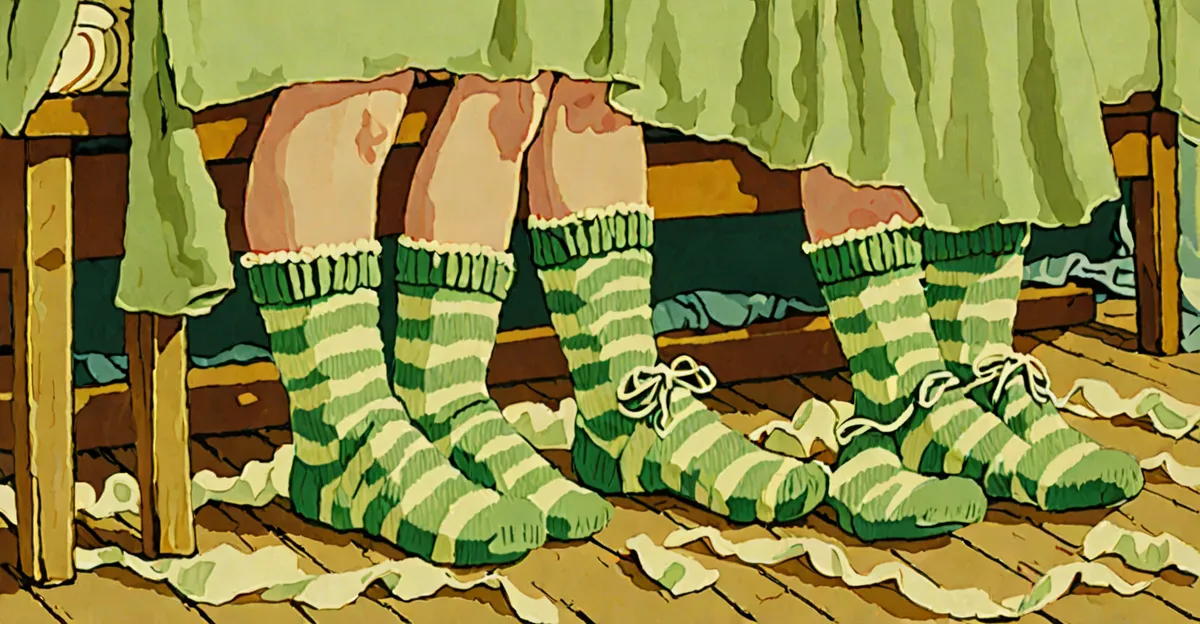
Matching socks
Sorting pairs = foundation for “two and two makes four”.
For a 4-year-old
Counting stairs
Every time going up/down we count the steps.
Shopping
“We need 5 apples. How many do we have? How many more?”
Cooking
“We’re adding 3 spoons of flour. One… two… three.”
For a 5-year-old
Board games with dice
Counting spaces, adding dots from two dice.
Measuring
“How many blocks long is this table? How long is the couch?”
Money (simple)
“You have 5 dollars. Ice cream costs 3. How much will be left?”
DIY Materials
1. Spindle Box
You need:
- Box with 10 compartments (e.g., screw organizer)
- 45 sticks (skewers, painted)
- Numbers 0-9 (stickers or written)
Use:
- Child places the appropriate number of sticks in each compartment
- NOTE: “0” stays empty! This is an important lesson.
2. Cards and Counters
You need:
- 10 cards with numbers (printed or handmade)
- 55 counters (coins, buttons, pebbles)
Use: As described above. The layout in two columns shows even/odd.
3. Base Ten Blocks
You need:
- Small cubes (1cm x 1cm) - units
- Rods (1cm x 1cm x 10cm) - tens
- Squares (10cm x 10cm) - hundreds
Can be made from cardboard or purchase wooden ones.
4. Bead Chains
You need:
- Beads
- String
- Patience
String chains: 10 beads, 20, 30…
Mistakes to Avoid
Don’t force recitation
“Say: one, two, three!” without objects = memorization without understanding.
Don’t correct immediately
Child makes a mistake counting? Let them finish. Then: “Let’s count together”.
Don’t rush to written numbers
Understanding first, then symbol. Written numbers can wait until 5+ years.
Don’t compare with other children
“Sophie already counts to 20!” - each child has their own pace.
Don’t use flashcards as the main method
Flashcards = visual memory. They don’t build understanding of quantity.
Daily Math Activities
During meals
- “You have 5 strawberries. Eat 2. How many are left?”
- “Do we have enough chairs for everyone?”
At the store
- “Take 3 tomatoes”
- “Which basket has more apples?”
In the kitchen
- Measuring ingredients
- Counting spoons, cups
- “Divide the pizza into 4 pieces”
On a walk
- Counting cars of a specific color
- “How many trees until the intersection?”
- “Are there more bikes or motorcycles?”
During bath time
- Pouring cups (small, medium, large)
- “How many cups of water does this bottle hold?”
When to Worry?
Normal for a 4-year-old:
- Gets lost after 10
- Skips numbers
- Counts objects twice
- Confuses 6 and 9
- Doesn’t always answer “how many” correctly
Worth consulting (5+ years):
- Lack of interest in numbers
- Difficulty recognizing “more/less”
- Constantly getting lost with small numbers (1-5)
- Strong aversion/anxiety about math
Hands-On vs Traditional School
Traditional School
- Starts with symbols (numbers)
- Lots of written exercises
- Memorizing facts (multiplication tables)
- Tests, grades, pressure
Hands-On Approach
- Starts with concrete (objects)
- Manipulating materials
- Understanding through experience
- Own pace, no grades
What can you do at home?
Even if your child goes to traditional school - the foundation built at home (concrete → abstract) will help them later.
Math is Everywhere
This is the most important lesson: math is not a “school subject”. It’s a way of understanding the world.
- Cutting pizza = fractions
- Building a tower = geometry
- Arranging puzzles = spatial reasoning
- Sorting toys = sets
- Time to leave = subtraction
When a child sees math everywhere - they’ll never say “why do I need this”.
Summary
Forget flashcards and worksheets.
Give your child:
- Objects to count (concrete)
- Time to manipulate (no rush)
- Everyday situations (practice)
- Joy of discovery (no pressure)
Four apples on the table will teach more than 100 repetitions of “4 is four”.
This article was created based on hands-on math materials (originally developed by Maria Montessori) and research on mathematical thinking in preschool-age children.
Read also
- STEM and Coding Without Screens
- Cleaning with a 4-Year-Old: How to Make Tidying Up Fun
- Cooking with a 4-Year-Old: 15 Recipes They Can Actually Make
Frequently Asked Questions
My child can count to 20 but can’t tell me how many objects are in a group of 5. Is that a problem?
This is actually very common and not a cause for concern. Reciting numbers in order (rote counting) is a memory skill, while understanding quantity (number sense) is a conceptual skill — and they develop separately. Your child needs hands-on experience with real objects: counting apples into a bowl, setting plates for dinner, sorting socks into pairs. With practice, the connection between the word “five” and the concept of five clicks into place.
When should my child start learning addition and subtraction?
Forget about formal arithmetic before age 6. What preschoolers need is a rock-solid understanding of quantity, comparison (more/less/equal), and one-to-one correspondence. If your child can reliably count 7 objects by touching each one, compare two groups and say which has more, and understand that removing one makes it fewer — they’re building the foundation that makes addition and subtraction intuitive later on.
How do I support math development without turning it into a stressful lesson?
The best math learning for preschoolers happens during everyday activities, not at a desk. Let your child help measure ingredients while cooking, divide snacks equally among family members, or count steps on the staircase. Use concrete materials they can touch and move — blocks, buttons, fruit. The moment your child says “I don’t want to” or loses interest, stop. Forced math practice at this age does more harm than good.
Author
Dzieckologia Team
Like this topic?
🏠 Browse all "Practical life" articles