“He’s so disobedient!”
You hear it from grandma. You read it in Facebook groups. You think it yourself about your child when they ignore your request to put on their shoes for the tenth time.
But what if I told you that your four-year-old isn’t disobedient?
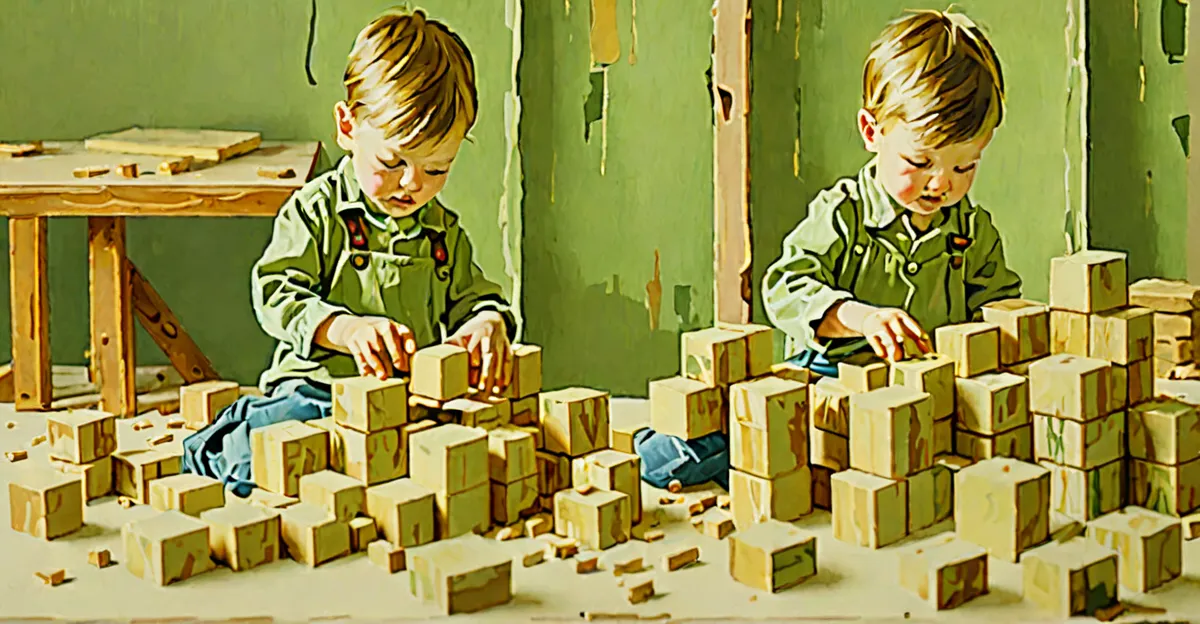
They are… under construction.
Executive Functions: The Brain’s Command Center
Executive functions are a set of cognitive skills that allow us to:
- Plan
- Organize
- Control impulses
- Switch attention
- Remember instructions (working memory)
They’re located in the prefrontal cortex - the part of the brain right behind the forehead.
The problem?
Your four-year-old’s prefrontal cortex is like an unfinished highway.
- Neural connections are just forming
- Myelination (insulation of nerve fibers) is underway
- Full maturity? Not until around age 25
This is why your child:
- Forgets what they were supposed to do halfway to their room
- Can’t resist taking a candy
- Bursts into tears when they can’t find their favorite toy
- Needs 15 reminders to put on their shoes
This isn’t a lack of discipline. This is neurobiology.
Three Pillars of Executive Functions
1. Working Memory
What it is: The ability to hold information “in your head” while performing a task.
Example: “Go to the kitchen, get a cup, and bring it to the living room.”
For an adult - simple. For a 4-year-old:
- I need to go to the kitchen (okay, going)
- What was I supposed to do? (stops)
- Oh, a cup! (takes cup)
- Where was I supposed to take it? (stands with cup)
How structured routines train working memory:
- Action sequences: “Get mat → unroll → bring material → work → return material → roll up mat”
- Each step requires remembering what came before and what comes after
2. Inhibitory Control
What it is: The ability to resist impulsive reactions.
Example: Not grabbing a toy from a friend’s hands, even when I really want it.
For a 4-year-old, this is ENORMOUS effort. The limbic system (emotion center) screams “I WANT IT!”, while the still-weak prefrontal cortex tries to say “wait”.
How everyday practice trains inhibitory control:
- Waiting for a turn (delayed gratification)
- Slow, controlled movements (pouring without spilling)
- “The Silence Game” (a Montessori classic) - walking so quietly that you can’t hear footsteps
3. Cognitive Flexibility
What it is: The ability to switch between tasks, think about things in different ways.
Example: “That material is in use, find something else to work with.”
For a 4-year-old who has DECIDED they want that exact material - this is a disaster. Rigid thinking is natural at this age.
How to train flexibility at home:
- Toy/material rotation
- Mixed-age group work (observing different approaches)
- Materials with multiple uses
Why Setting the Table > Educational App?
Here’s a typical household task: setting the table for dinner.
What the child’s brain must do:
Working memory:
- How many people are eating? (4)
- What do I need? (plates, utensils, cups, napkins)
- Where is everything? (plates in cabinet, utensils in drawer)
Inhibitory control:
- Don’t drop the plate
- Don’t run with a knife
- Don’t start eating before others
Cognitive flexibility:
- A fork is missing - I need to go back
- The cat is sitting on a chair - I need to go around
- Dad says we’re eating in the kitchen today, not the dining room
Now an “educational” app:
Child touches screen → animation → reward → next level.
What does it train?
- Reaction to stimuli (tap)
- Expecting external rewards
- Passive consumption
What does it NOT train?
- Planning in the real world
- Dealing with physical constraints
- Delayed gratification
The Research Is Clear
Diamond et al. (2007): Children in hands-on, child-led programs show 23% better impulse control than peers in traditional programs.
Lillard & Else-Quest (2006): Children in Montessori preschools have better working memory and cognitive flexibility.
Why? Because practical, real-world tasks are executive function training hidden in daily activities.
10 Household Tasks That Build the Brain
For 4-year-olds:
| Task | Executive Function |
|---|---|
| Setting the table | Working memory, planning |
| Sorting laundry (whites/colors) | Categorization, flexibility |
| Watering plants (without spilling) | Inhibitory control |
| Loading the dishwasher | Spatial planning |
| Matching socks | Working memory, matching |
| Sweeping | Sequencing, perseverance |
| Making a sandwich | Planning, sequence |
| Folding towels | Motor skills, precision |
| Feeding a pet | Memory (routine), responsibility |
| Sorting trash/recycling | Categorization, rules |
How to Introduce These Tasks?
1. Show slowly
Your child’s mirror neurons are “recording” your movements. The slower you show, the better they understand.
Wrong: Quick demonstration + verbal explanation Right: Slow movements + minimal words + full attention
2. Isolate difficulty
Don’t teach everything at once. First just carrying plates. Then arranging them. Then add utensils.
3. Allow mistakes
Spilled water is a learning opportunity, not a catastrophe. Have a cloth handy and let the child clean up themselves.
4. Don’t correct during the task
If the plate isn’t perfectly positioned - leave it. The child will notice on their own (or won’t, and that’s OK too).
5. Consistency
Same tasks daily. The brain builds pathways through repetition.
”But my child doesn’t want to help!”
I hear this often. Here’s what usually happens:
Scenario 1: You started too late
A two-year-old WANTS to set the table. You say “no, you’ll break it”. A three-year-old no longer wants to. A four-year-old says “that’s not my job”.
Solution: Start small. One task. Even “put out the napkins” is a start.
Scenario 2: You expect perfection
The child set the table, but crookedly. You correct it. Next time they don’t want to - why bother if it’ll be wrong anyway?
Solution: Leave it crooked. Seriously.
Scenario 3: You do it FOR them because it’s faster
Of course it’s faster. But faster ≠ better for development.
Solution: Plan more time. A child setting the table needs 15 minutes, not 2.
A Word About “Educational Toys”
I’m not saying all apps and electronic toys are bad. I’m saying that the real world is a better teacher.
A child who has:
- Poured water without spilling
- Sliced a banana
- Folded their clothes
…has built more neural connections than a child who earned 3 stars in an app.
Practical Weekly Plan
Monday: Setting the table for dinner (plates only) Tuesday: Matching socks after laundry Wednesday: Watering one plant Thursday: Setting the table + utensils Friday: Folding kitchen towels Weekend: Making a sandwich for breakfast
Add slowly. Observe. Don’t rush.
Emotional Regulation and Executive Functions: What’s the Link?
Many parents don’t realize that emotional regulation is part of executive functions — not a separate skill. When your four-year-old bursts into tears because a plate is slightly crooked, that isn’t a “random meltdown.” It is a momentary overload of inhibitory control and cognitive flexibility.
What this means in practice:
- Co-regulation before demands. Walking through a difficult moment calmly together — this is co-regulation — teaches the brain how to calm itself. Only once the child settles does access to executive functions return.
- A calm-down corner as self-regulation practice. A designated, safe space (a soft chair, a few cushions, a quiet sensory object) gives the child somewhere to experience the emotion and return to balance without escalating. Over time, they will start going there on their own.
- Visual schedules as a working memory bridge. Processing sequences — what comes next — is working memory in action. A visual schedule (illustrated steps of a routine) offloads that memory and reduces the number of meltdowns during activity transitions.
Children with neurodiversity — for example, those with ADHD — may need more time to integrate all three pillars of executive function. Observe, adjust the rhythm, and avoid drawing conclusions from a single difficult day.
Summary
Your four-year-old doesn’t need another app or early coding course.
They need:
- Time
- Patience
- Real tasks
- Trust
Every table set, every folded towel, every sorted sock is a step toward a brain that will handle future challenges.
The prefrontal cortex is building. Connection by connection. Day by day.
And you are the architect of this construction.
References
-
Diamond, A., & Lee, K. (2011). “Interventions shown to aid executive function development in children 4 to 12 years old.” Science, 333(6045), 959-964.
-
Lillard, A. S. (2017). “Montessori: The Science Behind the Genius.” Oxford University Press.
-
Center on the Developing Child at Harvard University. (2011). “Building the Brain’s ‘Air Traffic Control’ System: How Early Experiences Shape the Development of Executive Function.”
Read also
- What’s happening inside your 4-year-old’s developing brain
- End of Tantrums: Understanding and Managing Meltdowns
- Fears and Nightmares: How to Help a 4-Year-Old
Frequently Asked Questions
What exactly are executive functions and why do they matter for my 4-year-old?
Executive functions are a set of mental skills — including working memory, impulse control, and flexible thinking — managed by the prefrontal cortex. They are essentially your child’s brain’s “air traffic control system.” At age 4, these skills are just beginning to develop, which is why your child may struggle to wait their turn, follow multi-step instructions, or switch between activities.
How can I tell if my child’s executive function development is on track?
At age 4, it’s normal for children to forget instructions, act impulsively, and have difficulty with patience. If your child can occasionally follow a two-step direction, participate in simple board games, and remember where they put a toy, their development is likely on track. Consistent struggles across many settings by age 5-6 may warrant a conversation with your pediatrician.
What are the best everyday activities to support executive function development?
Simple games like Simon Says, matching card games, and cooking together are excellent for building working memory and impulse control. Giving your child small responsibilities — like setting the table or sorting laundry — exercises planning and sequencing skills. The key is to keep it playful and avoid drilling; these skills develop best through real-life practice, not worksheets.
Does screen time affect the development of executive functions?
Research suggests that high screen time before age 5 can slow prefrontal cortex maturation — particularly when content changes rapidly and requires no planning or patience. The goal is not to eliminate screens entirely, but to use them intentionally: narrative and interactive content (where the child makes choices) is less disruptive than passive, fast-scrolling videos. Practical boundaries help: consider placing screen time after outdoor play or a hands-on Montessori activity, not before.
How does Montessori’s approach to fine motor skills connect to executive functions?
Fine motor skills and executive functions develop in parallel and reinforce each other. Montessori practical life activities — pouring, cutting, lacing, kneading dough — require simultaneous motor control and focused attention, which directly trains inhibitory control and working memory during hands-on work. A child mastering precise hand movements is simultaneously building the same prefrontal cortex pathways responsible for planning and emotional regulation.
Should I be concerned if my 4-year-old’s executive function development seems behind their peers?
Age 4 is a period of enormous natural variation — the pace of prefrontal cortex maturation differs from child to child. It is worth speaking with your pediatrician if, after the fifth birthday, your child still cannot follow a simple two-step instruction, has significantly more frequent meltdowns than peers, or avoids activities requiring any concentration. An earlier conversation with a child psychologist or developmental specialist can clarify whether additional support is needed — for example, around neurodiversity.
Author
Dzieckologia Team
Like this topic?
🧠 Browse all "Executive functions" articles