You scroll Pinterest, you see: beige
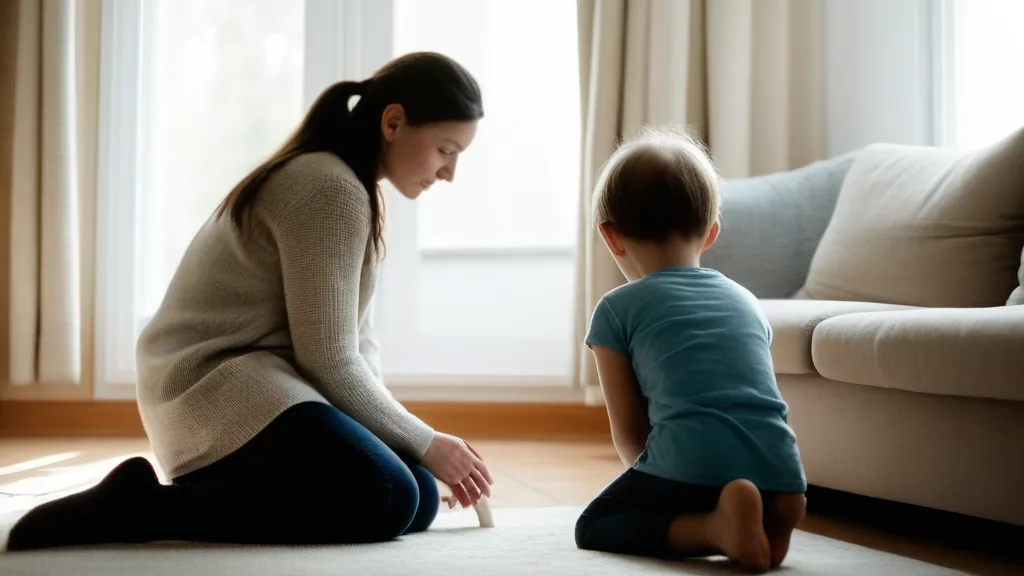
Beige walls. Beige furniture. Beige toys. Beige carpet. Beige frames. Beige child (almost).
This is “child-friendly aesthetics” according to the internet.
And it’s… sad.
Where did the “Sad Beige” trend come from?
The “neutral children’s room” trend was born from good intentions:
- Less stimuli = better concentration
- No bright colors = calm
- Minimalism = order
But somewhere along the way we went too far.
We started believing that color = chaos. That joy = overstimulation. That a “proper” children’s room must look like a Scandinavian furniture catalog.
Meanwhile, child development research supports thoughtful use of color. Maria Montessori herself used colors extensively.
What research (and Montessori) actually says about colors
The Pink Tower is… pink
Not beige. Not natural wood. Pink.
The Red Rods are… red
Bright red.
The Cylinders have… colored knobs
Blue, yellow, green, red.
Why?
Because Maria Montessori understood that color serves isolation of quality. The Pink Tower is pink so that the child focuses on ONE thing: the difference in size. Color eliminates distractions.
Color ≠ chaos. Too many stimuli at once = chaos.
2026 Trend: Dopamine Decor
In contrast to the years of “sad beige,” Dopamine Decor is coming - a style that emphasizes:
- Energetic colors
- Personalization of space
- Joy and warmth
- Expressing personality
Does this mean you should paint the room neon pink and hang a disco ball?
No (unless you want to).
It means you have a choice.
How to combine calm design with color (without chaos)
Rule 1: Calm background, colorful accents
Walls: Neutral, but don’t have to be beige
- Light blue (calm)
- Soft green (nature)
- Warm white (not sterile)
- Light gray (modern)
Accents: This is where color can be!
- Shelf in a vibrant color
- Colorful rug
- Picture frames
- Pillows
Rule 2: Toys can be colorful
A thoughtful children’s room doesn’t mean “only wooden, only natural.”
Good:
- Colorful blocks (but solid colors, not patterns)
- Rainbow puzzle
- Colorful sorting bowls
- Balls in different colors
Bad:
- Toys with 15 functions, lights, sounds AND colors all at once
- Patterned everything (checkered rug + polka dot bedding + floral wallpaper)
- Excess - 50 colorful things = chaos, 6 colorful things = OK
Rule 3: Isolate, don’t eliminate
Instead of removing all colors, group them.
Example:
- Reading corner: warm colors (yellow, orange)
- Art corner: cool colors (blue, green)
- Sleep zone: neutral, muted
Rule 4: The child is not decoration
Ask the child what they like. A four-year-old has preferences.
“What color do you want on your pillow?” “Which picture do you want on the wall?”
Personalization = sense of ownership = respect.
What to avoid (real problems, not color)
Problem 1: Excess patterns
- Bunny wallpaper + star rug + car bedding = visual chaos
- One pattern is enough. The rest should be plain.
Problem 2: Everything on display
- 50 toys on shelves = overstimulation
- 6 toys, the rest in rotation = calm (even if colorful)
Problem 3: Lights and sounds
- LED projector lamp changing colors = stimulation, not calm
- Stable, warm light = OK
Problem 4: TV in the child’s room
- Regardless of wall color - the screen dominates the space
Moodboard: Colorful Child-Friendly Room
Sample palette:
| Element | Color | Why |
|---|---|---|
| Walls | Light sage | Calm, nature |
| Bed | Natural wood | Warmth, classic |
| Rug | Mustard | Accent, warmth |
| Shelf | White | Neutral base |
| Toys | Multicolored | Joy! |
| Bedding | White/cream | Sleep calm |
| Curtains | Linen beige | Don’t compete |
Rule: 60% neutral, 30% dominant accent, 10% additional color.
”But aren’t children’s rooms supposed to have few stimuli?”
Yes. And that’s still true.
But “few stimuli” doesn’t mean “zero color.” It means:
- Order - everything has its place
- Rotation - not everything at once
- Quality, not quantity - 6 good things > 60 random ones
- No electronic distractions - this is the real problem
Blue room with 6 toys = few stimuli. Beige room with 50 toys, TV and glowing lamp = many stimuli.
It’s the whole picture, not just color.
What does research say?
Color and learning:
- Studies show that certain colors support concentration (blue, green)
- Red can increase energy (good in movement zone, not sleep)
- Yellow stimulates creativity
Color and emotions:
- Warm colors (yellow, orange) - joy, energy
- Cool colors (blue, green) - calm, concentration
- Neutral (beige, gray) - neutrality… but also potentially boring
Conclusion: Conscious color choice > reflexive beige.
Practical plan: Add color to an existing room
Weekend 1:
- Assess the current room - how many stimuli are there? (regardless of color)
- Remove excess (toys to rotation, decorations that don’t serve)
Weekend 2:
- Choose one colorful accent (pillow, rug, frame)
- Ask the child for their opinion
Weekend 3:
- Assess the effect - how is the child behaving?
- Adjust if needed
Cost: $15-40. Result: A room with soul.
The permission you need
Here it is:
You can have a colorful children’s room and still support your child’s development.
You can have a pink shelf. You can have yellow pillows. You can have a rainbow rug.
No child development expert ever said to live in a beige world.
The real advice is to observe your child and prepare an environment that supports their development.
If your child likes colors - give them colors. If your child needs calm - give them calm.
You know your child better than Pinterest.
Summary
| Myth | Truth |
|---|---|
| A child’s room must be beige | A child’s room must be organized |
| Color = chaos | Excess = chaos |
| Only wood and natural materials | Quality > material |
| Parents’ aesthetics = child’s good | Child’s needs = child’s good |
End of the sad beige era.
Welcome to the era of conscious color.
Read also
- Low-Stim Parenting: A Digital Detox Guide
- Cleaning with a 4-Year-Old: How to Make Tidying Up Fun
- Cooking with a 4-Year-Old: 15 Recipes They Can Actually Make
Frequently Asked Questions
Will adding color to my child’s room cause overstimulation?
Not if you do it thoughtfully. Overstimulation comes from too many competing patterns, noisy toys, and cluttered surfaces - not from a mustard rug or a blue shelf. Keep the background neutral, limit visible items through rotation, and let color appear in deliberate accents rather than everywhere at once.
My child insists on bright pink everything - should I let them choose?
Yes, within reason. Giving a 4-year-old a say in their space builds a sense of ownership and respect. You can offer a curated selection of options (for example, three pillow colors) so the room stays balanced while your child still feels heard and involved.
Do I need to buy expensive Montessori furniture for a proper children’s room?
Absolutely not. The core principle is accessibility, not a specific brand. A low shelf from IKEA, hooks at child height, and a few well-chosen items work just as well as designer pieces. Focus your budget on reducing clutter and making the space functional for your child’s independence.
Bibliography
-
Montessori, M. (1912). “The Montessori Method.” Frederick A. Stokes Company.
-
Elliot, A. J., & Maier, M. A. (2014). “Color psychology: Effects of perceiving color on psychological functioning in humans.” Annual Review of Psychology.
-
Hemphill, M. (1996). “A note on adults’ color-emotion associations.” The Journal of Genetic Psychology.
Author
Dzieckologia Team
Like this topic?
🏠 Browse all "Practical life" articles